Guides
Twenty plain guides, each starting with the answer, then the formula, worked examples and sources. Each one links to the free calculator that does the sum.
Updated 21 October 2026. Sources named on the page.
- Answer first, then the formula and a worked example
- Every figure names its source
- Kilojoules and calories side by side
- For healthy adults aged 19 and over; not medical advice
Food and calories
 How many calories should I eat a day?Calories needed depend on age, sex, size and activity
 What is a calorie deficit?A calorie deficit means eating fewer calories than you use
 How to calculate TDEETDEE is your resting energy times an activity factor
 Activity level explainedThe answer, the formula and worked examples.
 kJ vs caloriesKilojoules and calories both measure food energy
 How to read nutrition labels in AustraliaThe answer, the formula and worked examples.
Protein and macros
 How much protein do I need a day?The answer, the formula and worked examples.
 Protein per kg by ageThe answer, the formula and worked examples.
 How to calculate macrosTurn a daily calorie target into grams of protein, carbohydrate and fat
 Macro split examplesThe answer, the formula and worked examples.
 How to calculate BMI
 BMI chart for adults
 BMI limits: what the number misses
Sleep and water
 How much sleep do I need?Most adults need 7 to 9 hours of sleep a night, and older adults often 7 to 8
 How many sleep cycles do you need?Most adults aim for 5 or 6 sleep cycles of about 90 minutes, or 7.5 to 9 hours
 How much water should I drink a day?The answer, the formula and worked examples.
 Hydration mythsThe answer, the formula and worked examples.
 How to start a habit tracker
 Habit stacking explained
 How long does it take to build a habit?
Journals and mood
Writing, prompts and mood tracking.
Goals and self care
Setting goals you keep, and small things that look after you.
Diaries and trackers
Food, sleep, weight and meal plans.
Keep your results in the Daily Journal
Habits, food, mood and sleep in one private place, with progress charts and a daily research card. Free to start.
- Every claim names its study
- Alone, as a couple or with a group
- Private by default
How the guides are written
There are forty three guides here, and each one starts with the answer, then shows the formula, a worked example you can check, and the sources. They are short on purpose. Each one links to the free calculator that does the sum for you, so you can read the reasoning and then try your own numbers.
The guides are written for healthy adults aged 19 and over. They are general information, not medical or dietary advice, and the health disclaimer explains who should talk to a professional instead.
Where to start
- Food and calories: begin with how many calories you should eat, then how to calculate TDEE and activity level explained. Add what a calorie deficit is, kJ vs calories and how to read nutrition labels in Australia.
- Protein and macros: begin with how much protein you need and protein per kg by age. Then how to calculate macros and macro split examples.
- Weight and BMI: how to calculate BMI, the BMI chart for adults and BMI limits, which explains what the number misses.
- Sleep and water: how much sleep you need, how many sleep cycles, how much water to drink and hydration myths.
- Habits: how to start a habit tracker, habit stacking explained and how long it takes to build a habit.
The numbers that come up again and again
A handful of figures run through the whole library. Resting energy is Mifflin and St Jeor, multiplied by an activity factor from 1.2 to 1.9. A common rule of thumb says 550 kcal a day below your energy is about 0.5 kg a week, from roughly 7,700 kcal per kg. Protein and carbohydrate have 4 kcal per gram and fat has 9. One calorie is 4.184 kJ.
For protein the national reference is 0.84 g per kg for men and 0.75 g per kg for women aged 19 to 70. For water the adequate intake is 2.6 litres for men and 2.1 litres for women. For sleep it is 7 to 9 hours, in cycles of about 90 minutes. For habits, one study found a median of 66 days, with a range from 18 to 254.
What the guides will not do
They will not tell you what to weigh, promise a result or replace your doctor. They will not use a number we cannot source: a figure that was not read from a file is written as unknown, and every guide ends with where its figures come from.
They also will not scold. Most of them say the same plain thing in different words: pick the lower activity level if unsure, start with one habit, and treat every estimate as a starting point.
Where the Daily Journal fits
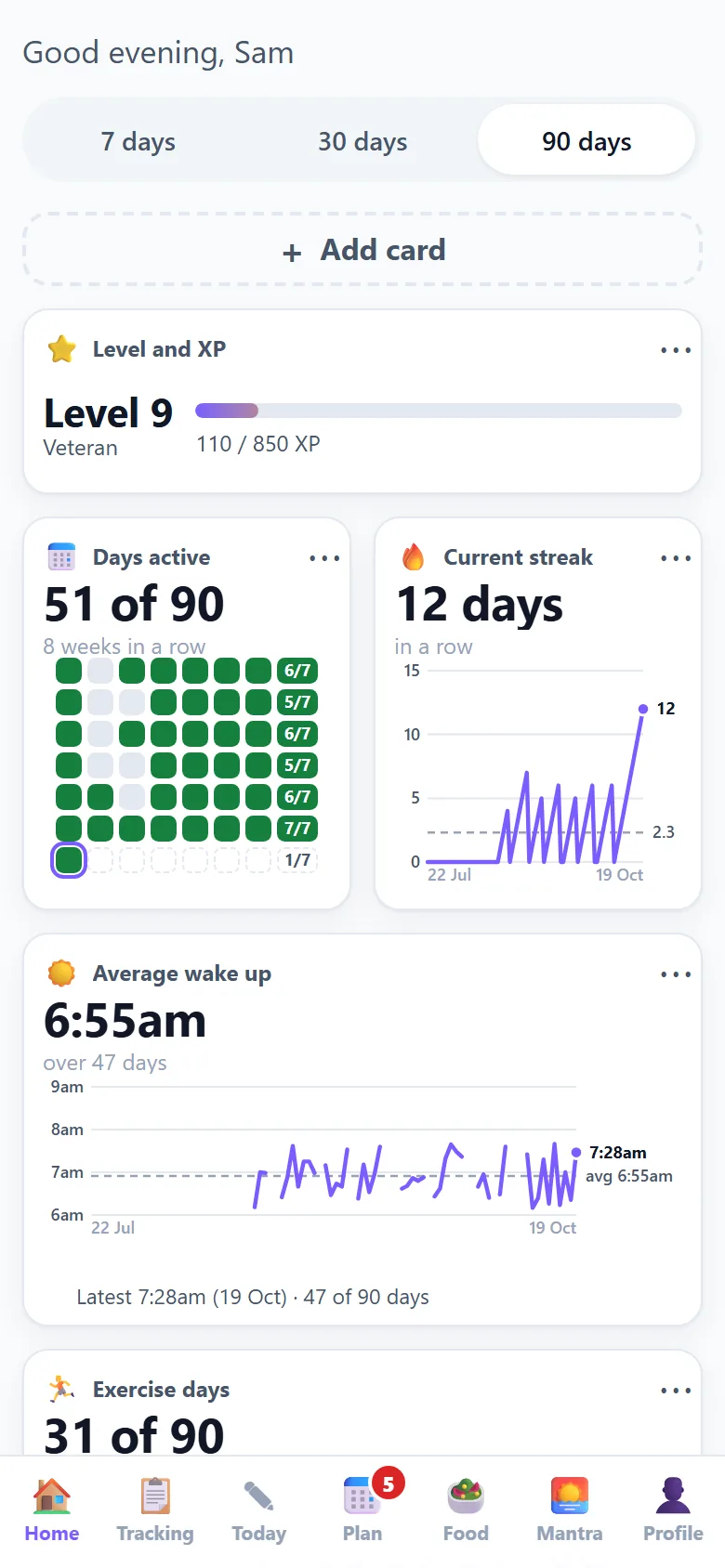
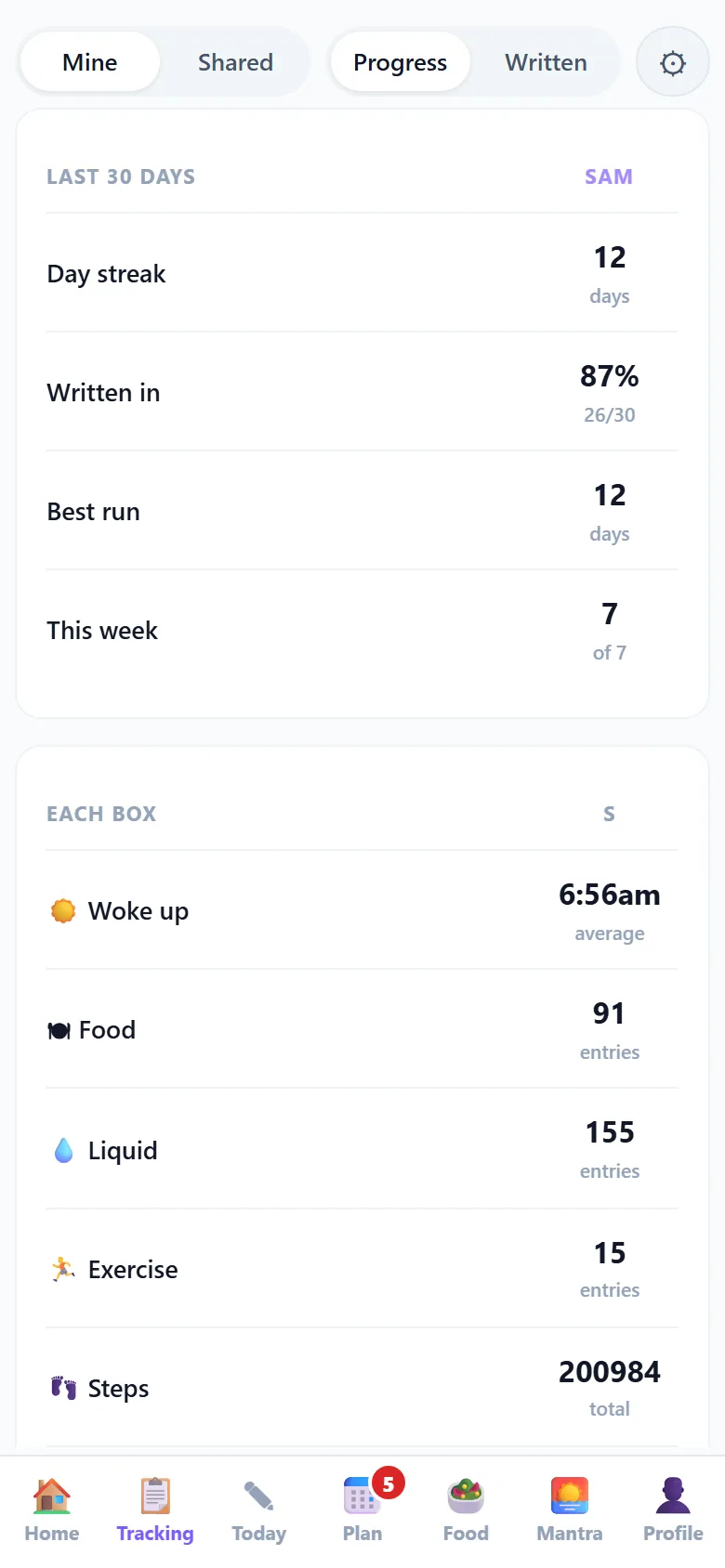
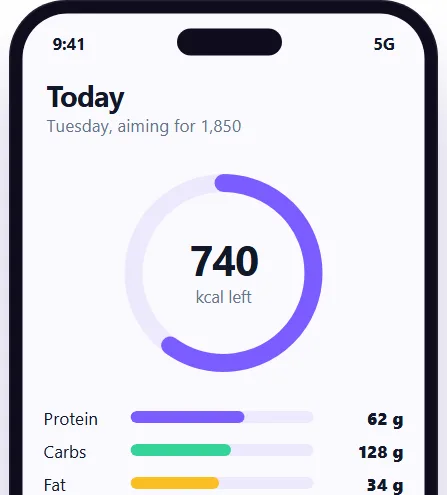
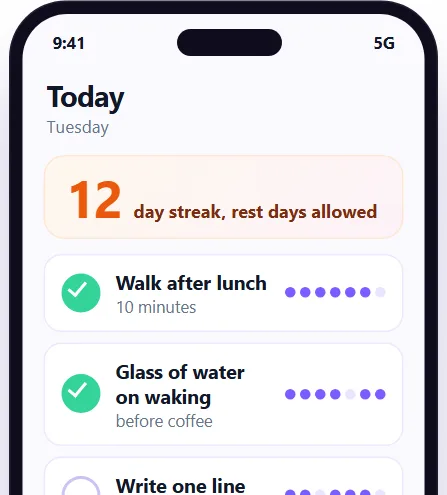
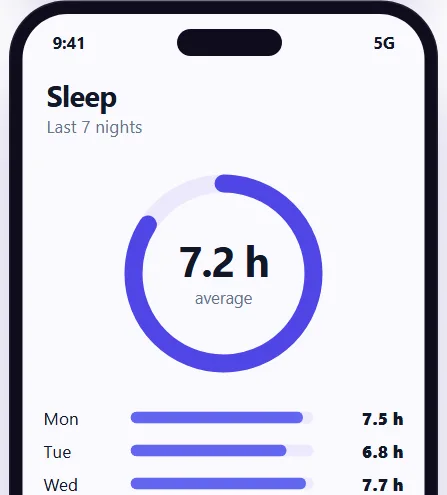
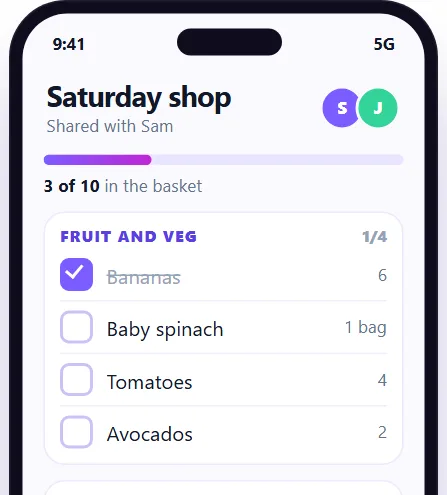
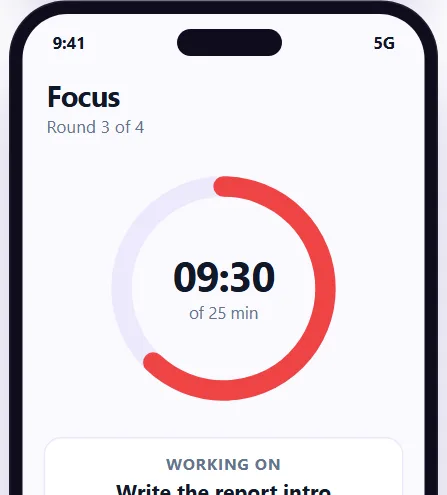
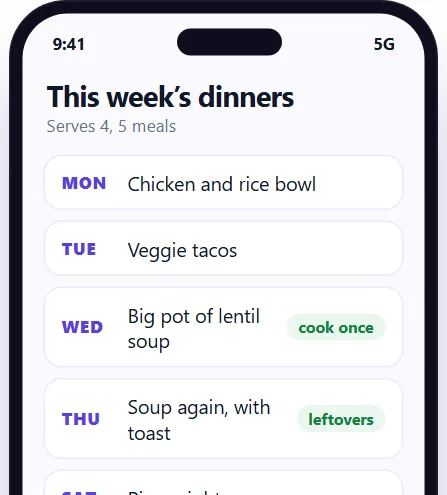
Reading is the easy part. The Daily Journal is a free place to do the tracking the guides describe: food and drink on Today, streaks and trends on Home, and your days side by side on Tracking. The tool pages show what a calorie counter, habit tracker, sleep tracker and meal planner could look like in the app, with an honest note on what exists today.
Reading order for three common goals
- Eat for a slow weight loss: how many calories should I eat, how to calculate TDEE, activity level explained, what is a calorie deficit, then how much protein and how to read nutrition labels.
- Get stronger or keep muscle: how much protein you need, protein per kg by age, how to calculate macros, then macro split examples.
- Build a routine that sticks: how to start a habit tracker, habit stacking, then how long it takes to build a habit. Add how much sleep you need and how many sleep cycles if evenings are the problem.
Which guide goes with which calculator
Each guide hands off to a free calculator, so you can read the reasoning and then try your own numbers.
- How to calculate BMI, the BMI chart for adults and BMI limits go with the BMI calculator.
- How to calculate TDEE and activity level explained go with the TDEE calculator.
- How many calories should I eat and what is a calorie deficit go with the calorie and calorie deficit calculators.
- How much protein and protein per kg by age go with the protein calculator.
- How to calculate macros and macro split examples go with the macro calculator.
- kJ vs calories goes with the kJ to calories converter, and how to read nutrition labels in Australia is the one to read before it.
- How much sleep and how many sleep cycles go with the sleep calculator, and how much water and hydration myths go with the water intake calculator.
- How long it takes to build a habit goes with the habit streak calculator.
Questions
How many guides are there?
There are forty three guides covering food and calories, protein and macros, weight and BMI, sleep and water, and habits. Each starts with the answer and links to the calculator that does the sum.
Are the guides medical advice?
No. They are general information for healthy adults aged 19 and over and do not replace a doctor or an accredited practising dietitian. The health disclaimer says who should not use them.
Where do the figures come from?
Each guide ends with its sources, such as the NHMRC for protein and fluids, the World Health Organization for BMI, Food Standards Australia New Zealand for labels and Lally and others for habits. The sources page collects them.
How do I calculate my daily calories?
Work out your resting energy with the Mifflin and St Jeor equation, multiply by an activity factor from 1.2 to 1.9, then adjust for your aim. The calorie calculator does it for you.
What is the difference between BMR and TDEE?
Resting energy is what your body uses at rest, from the Mifflin and St Jeor equation. TDEE multiplies it by an activity factor to give the energy you use in a day.
How long does it take to lose 0.5 kg?
A common rule of thumb is that eating 550 kcal a day below your daily energy loses about 0.5 kg a week, from roughly 7,700 kcal per kg, though real results vary between people.
How much protein, water and sleep do I need?
The reference protein amount is 0.84 g per kg for men and 0.75 g per kg for women, fluids 2.6 litres for men and 2.1 litres for women, and sleep 7 to 9 hours for most adults.
Is BMI a good measure of health?
BMI uses only height and weight, so it cannot tell muscle from fat or show where fat sits. It is a quick screening number and a poor judge of one person's health.
How do I start a habit tracker?
Pick one small habit, attach it to a cue, choose paper or an app, mark each day and review once a week. Starting with one to three habits is plenty.
Do the guides link to calculators?
Yes. Each guide links to the free calculator that does the sum, so you can read the reasoning and then try your own numbers. The calculators save nothing you type.
Keep going
Tools that go with this page
Each one shows an example screen, what the paid apps charge and what the Daily Journal does today.
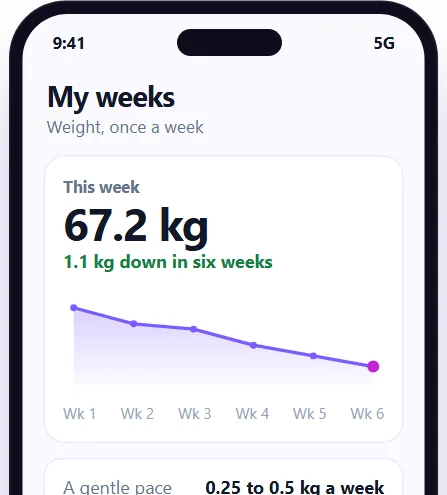 Weight loss journal
Keep it all in one private place
Sign up free for the Daily Journal app: habits, food, mood and sleep in one private place. Free to start.