How much water should I drink a day?
The national adequate intake of fluids for adults is 2.6 litres a day for men and 2.1 litres for women. That is what you drink in a day: plain water, milk and other drinks. Food adds more water on top.
Updated 21 October 2026. Sources named on the page.
Key factThe NHMRC adequate intake of fluids for adults is 2.6 litres a day for men and 2.1 litres a day for women, including water, milk and other drinks.
- The reference amounts in litres, glasses and bottles
- What counts towards fluids
- When needs go up
- For healthy adults aged 19 and over
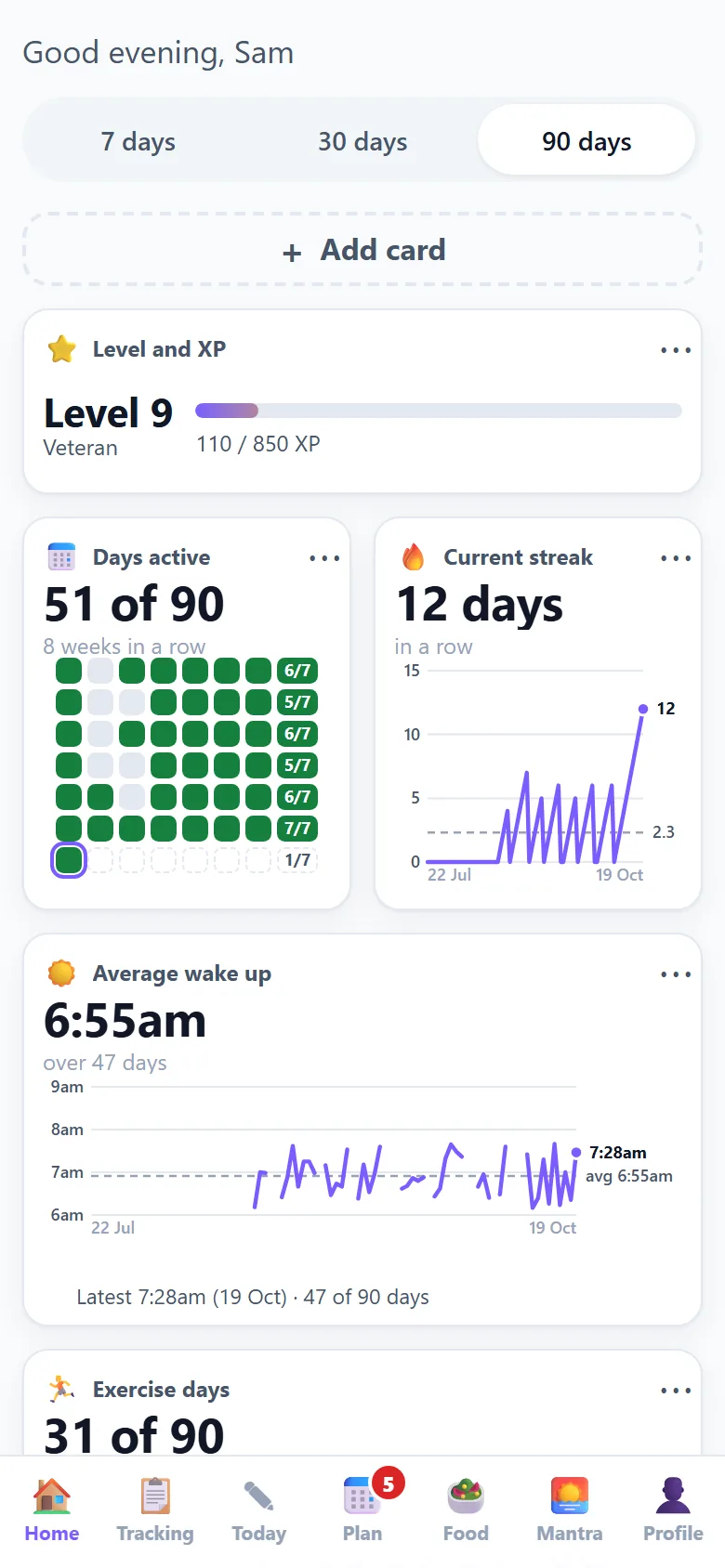
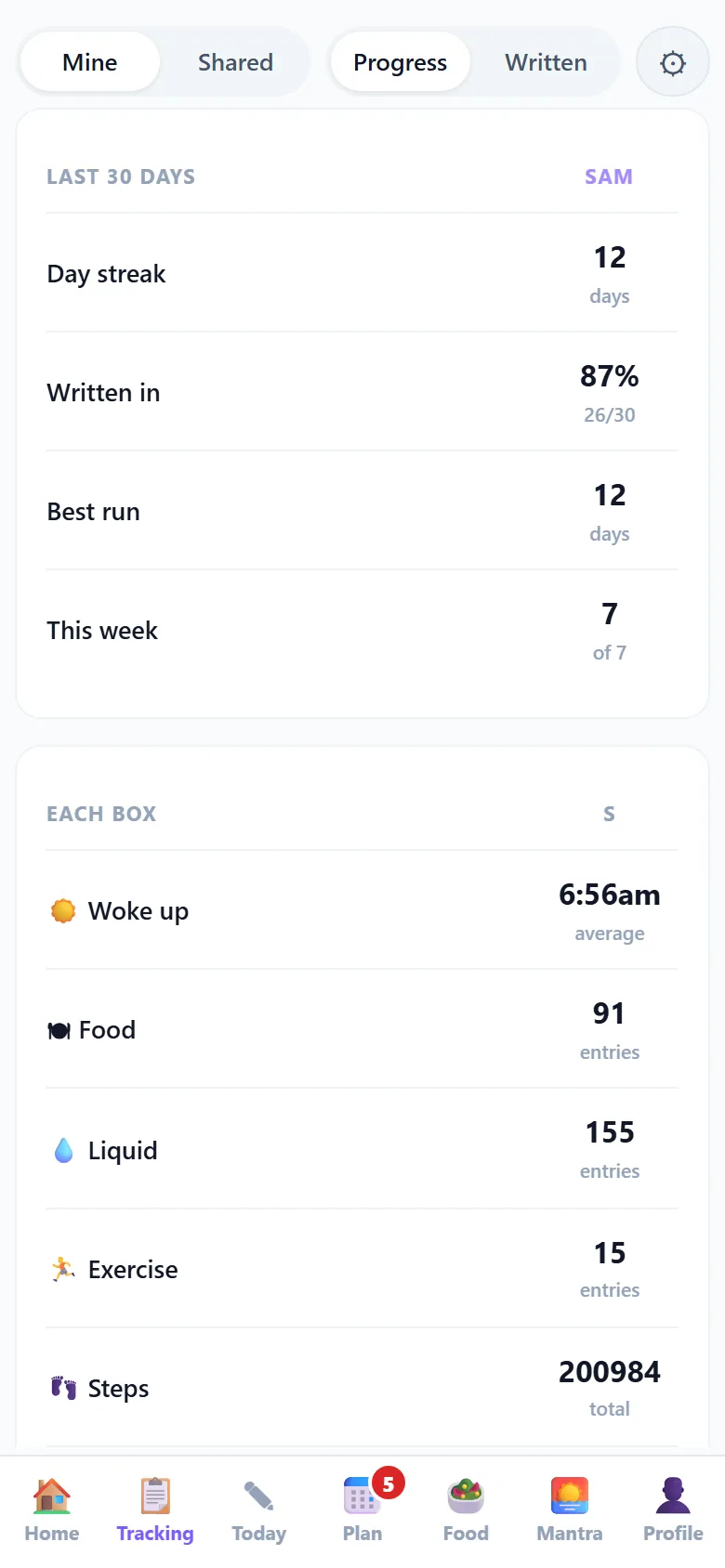
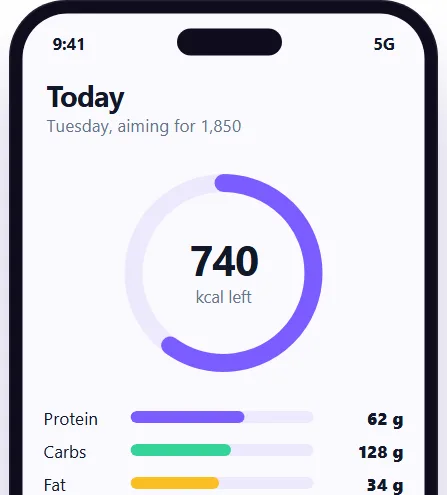
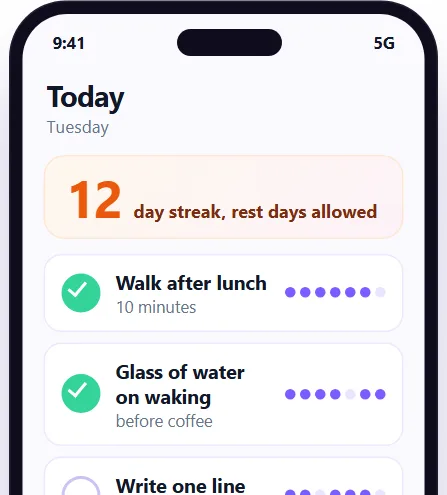
Keep your results in the Daily Journal
Habits, food, mood and sleep in one private place, with progress charts and a daily research card. Free to start.
- Every claim names its study
- Alone, as a couple or with a group
- Private by default
Your glasses a day
Choose your sex and glass size and see the amount in litres, glasses and fluid ounces.
The amounts in glasses and bottles
Glasses = daily amount in mL divided by glass size in mL, rounded to one decimal place.
Adequate intake of fluids from drinks, adults 19 and over
| Group | Per day | 200 mL glass | 250 mL glass | 300 mL glass | 500 mL bottle |
|---|---|---|---|---|---|
| Men | 2,600 mL | 13 | 10.4 | 8.7 | 5.2 |
| Women | 2,100 mL | 10.5 | 8.4 | 7 | 4.2 |
Sources: National Health and Medical Research Council (NHMRC), Nutrient Reference Values for Australia and New Zealand, water: adequate intake of fluids
General information, not medical advice.
What counts
The figure counts what you drink: plain water, milk and other drinks such as tea and coffee. Plain water is a good everyday choice but does not have to make up the whole amount. Food adds water too: the same guidance puts total water, from drinks and food together, at 3.4 litres for men and 2.8 litres for women.
When you may need more
Hot weather, exercise, illness and a very dry climate all raise needs. The reference amount is a general adult figure and cannot allow for these.
Listening to your body
For most healthy adults, drinking to thirst and steadily through the day works well. If you are unsure, or you have a kidney, heart or other medical condition, ask a doctor.
Pregnancy and breastfeeding
Needs are different and this guide does not cover them. A doctor or midwife can advise.
Turn the number into a routine
The reference figures are 2.6 litres a day for men and 2.1 litres for women, counting all drinks. In glasses of 250 mL that is about 10 and about 8. Rather than counting all day, attach glasses to things you already do: one on waking, one with each meal, one mid morning and one mid afternoon.
A bottle you refill is the easiest counter. Work out how many glasses it holds and you only need to count refills.
Reading your own signals
Thirst is a signal worth listening to. Pale urine through the day is a common rule of thumb that you are drinking enough, and a dark colour suggests you may need more. These are rough guides, not a test.
Needs rise in hot weather, with exercise and during illness. If a doctor has told you to limit or increase fluids, follow that advice, not these averages.
Track it for a week
Fill one circle for each glass on the water tracker printable, or use the Liquid box in the Daily Journal, which has a reminder and a chart. A week is enough to see your usual pattern.
Questions
Is it 8 glasses a day?
Eight glasses is a handy rule of thumb. The reference for women is about 8 glasses of 250 mL and for men about 10, counting all drinks, not only plain water.
Does tea or coffee count?
Yes. Drinks in usual amounts count towards your fluids.
Do I need to drink more when I exercise?
Usually yes. Needs rise with exercise and heat. Drink to thirst and keep a drink handy.
Can you drink too much?
Yes. Very large amounts in a short time can be harmful. Drink steadily and ask a doctor if unsure.
Do tea, coffee and soft drinks count?
Yes. All drinks count towards your fluids. Water is the simplest choice for most people.
How many 250 mL glasses is 2.1 litres?
About 8 and a half. The water calculator shows the exact figure for the glass size you choose.
Can you drink too much water?
It is uncommon, but possible. Drinking far more than you need, especially quickly, is not helpful. Drink to thirst and follow a doctor's advice if you have a condition that affects fluids.
Keep going
Tools that go with this page
Each one shows an example screen, what the paid apps charge and what the Daily Journal does today.
Make water a daily habit
Sign up free for the Daily Journal app: habits, food, mood and sleep in one private place. Free to start.