Mind
Sleep tools and plain affirmations: a calculator that fits bedtimes to whole sleep cycles, two short guides and two affirmation lists.
Updated 21 October 2026. Sources named on the page.
- Sleep tools and guides, free today
- Affirmation lists, each with its source
- General information, not medical advice
- Nothing you type is saved or sent
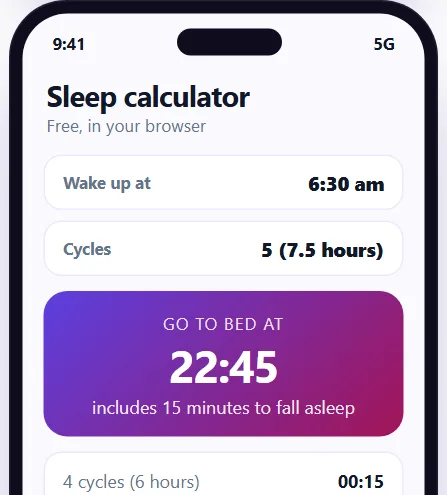 Sleep calculator
 How many sleep cycles
 How much sleep you need
Affirmations
Plain, believable words to read slowly on an ordinary day.
 Positive affirmations
 Daily affirmations
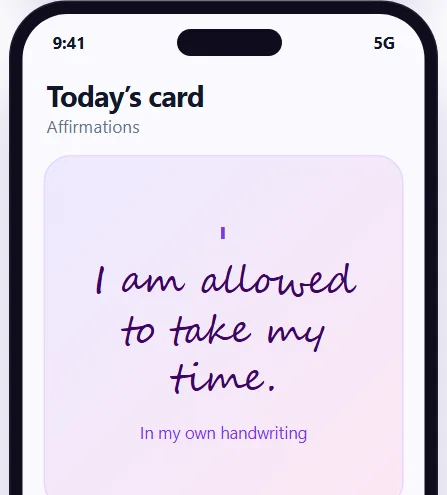 Affirmation app
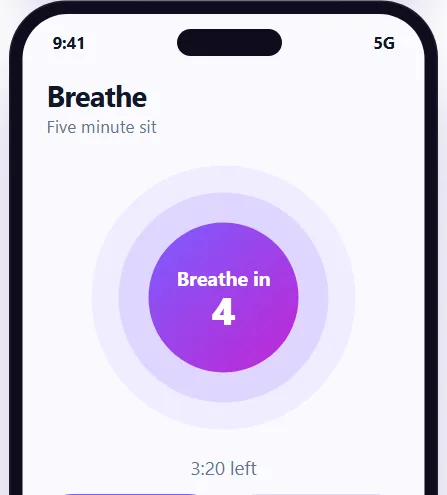 Meditation app
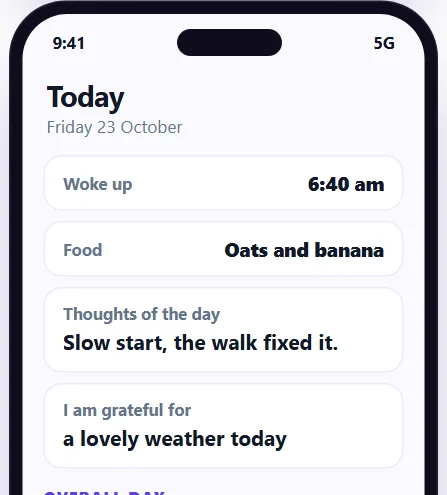 Journal app
Quotes, affirmations and gratitude
Words to keep, and how to use them.
Keep your results in the Daily Journal
Habits, food, mood and sleep in one private place, with progress charts and a daily research card. Free to start.
- Every claim names its study
- Alone, as a couple or with a group
- Private by default
What this hub covers
This hub is for the quieter side of a routine: sleep, calm words and a moment to notice how you feel. It holds a sleep calculator that fits bedtimes to whole sleep cycles, two short guides on how much sleep you need, and two lists of plain affirmations, one for each day of a month and one of fifty short lines. It is not therapy and it does not claim to treat anything.
It is written for ordinary days. If you are in danger or need urgent help, call 000 in Australia or your local emergency number, and for ongoing worry or low mood please see a doctor or a psychologist.
Sleep: the part with numbers
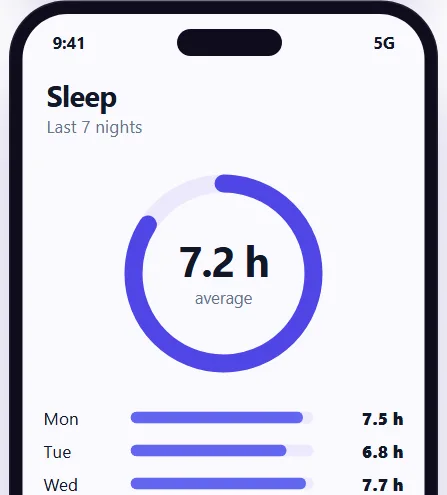
Most adults need 7 to 9 hours of sleep a night and older adults often 7 to 8, according to the Sleep Health Foundation in Australia and the National Sleep Foundation in the US. Needs differ, so how you feel in the day matters too.
A sleep cycle lasts about 90 minutes, so 5 or 6 cycles is 7.5 to 9 hours. Add about 15 minutes to fall asleep. To wake at 7:00 am, that means going to bed at 11:15 pm for five cycles or 9:45 pm for six. The sleep calculator does the sum for any wake time or bedtime, and shows 4, 5 and 6 cycles side by side.
Affirmations: how to use them honestly
The affirmation pages are written to be agreed with, not shouted. The daily list gives one line for each day of a month, to read in the morning or before bed. The longer list has fifty short, believable lines. If a line feels untrue, skip it and pick one that feels true enough today.
Affirmations help some people and not others, and we make no promise of any result. They work best when they are small, specific and in your own words, which is why the printable affirmation cards leave the lines blank for you to write.
How to choose where to start
- You cannot get to sleep or wake tired: start with the sleep calculator, then read how many sleep cycles you need.
- You do not know how much sleep is enough: read how much sleep you need, which gives hours by age.
- You want a calm line for the morning: use the daily affirmations, one for each day of the month.
- You want a longer list to pick from: use the positive affirmations, fifty short lines for ordinary days.
- You want to write your own: print the affirmation cards, eight blank cards with dotted cut lines, or the gratitude journal printable with three lines for each day.
Where the Daily Journal fits, and what it does not do yet
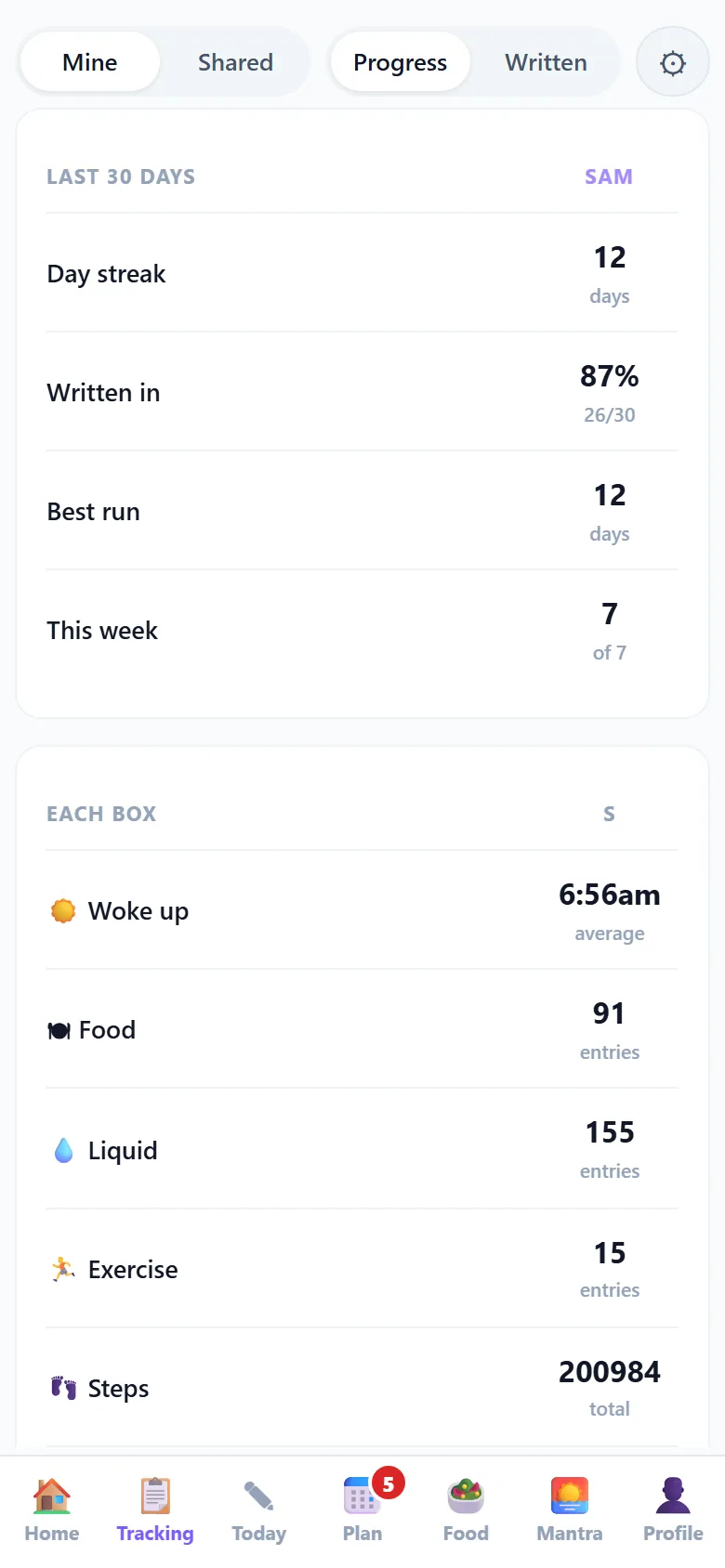
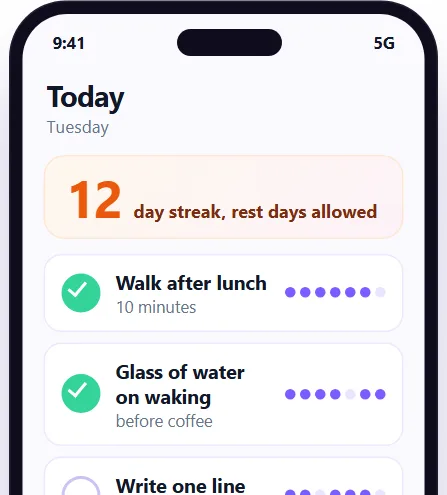
The Daily Journal has a Mantra page with a swipe feed of affirmation cards, categories you can switch on and off, quotes, books and talks with their sources, and saved favourites. Today has a gratitude box, a thoughts box and a mood row, and your sleep sits beside them on the Tracking screen.
It does not yet let you write your own affirmation cards, play audio, run a meditation timer with a bell or a breathing guide, or record hours slept as a total. The affirmation, meditation and journal pages show what those could look like and what paid apps charge, and a free sign up tells us which to build first.
A gentle evening routine you can try tonight
- Choose a wake time, then use the sleep calculator to find a bedtime that fits whole 90 minute cycles.
- Put your phone down at the same time each night. The cue matters more than the exact minute.
- Read one affirmation from the daily list, slowly, and let it be small.
- Write one thing you are grateful for, on the gratitude printable or in the Daily Journal.
- In the morning, note when you woke and how you felt, so the pattern shows up over a week.
What to track about sleep
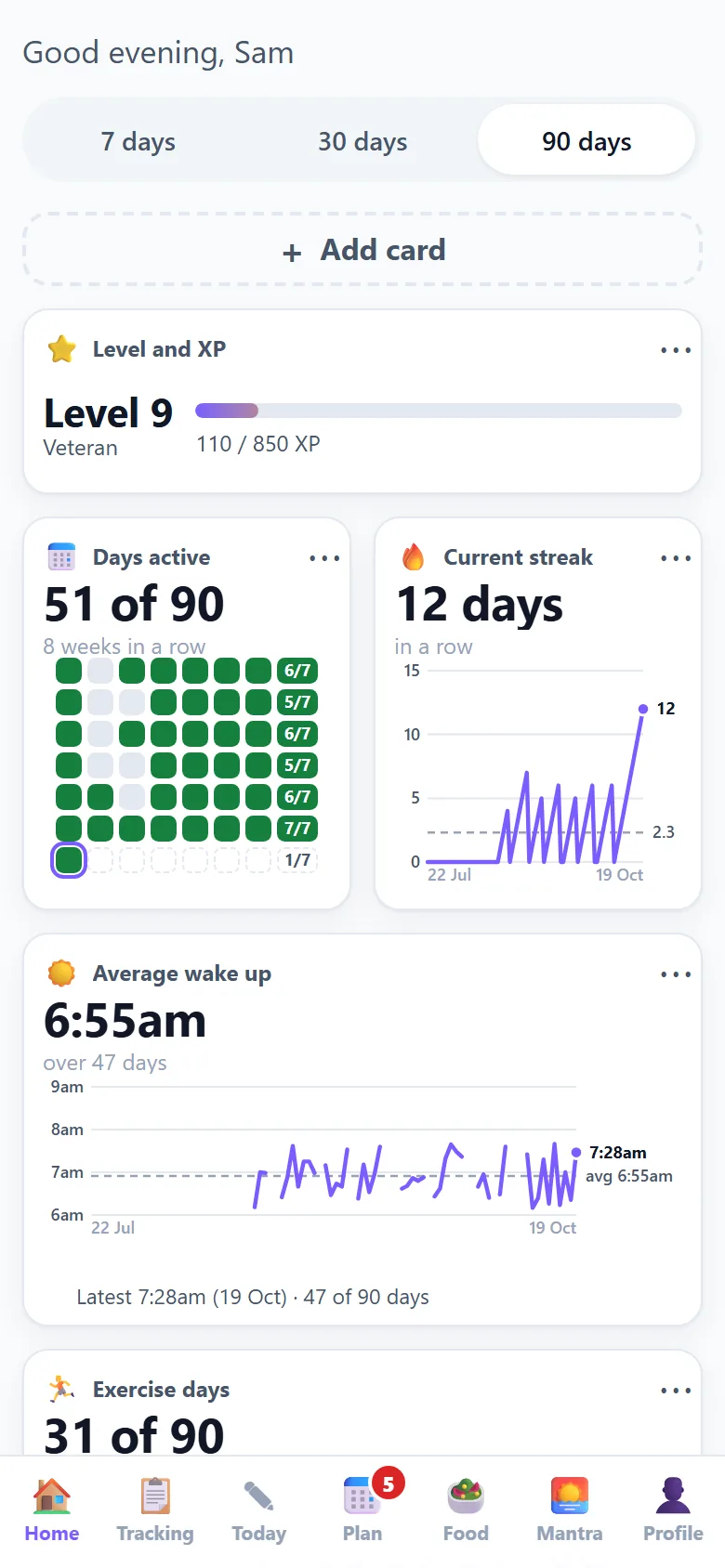
You do not need a wearable. Bedtime, wake time and how you felt are enough to see a pattern, and a printable sleep diary has room for when you fell asleep and how many hours you slept. In the Daily Journal the Woke up and Bedtime boxes feed an average wake time chart, and the Tracking screen shows sleep beside mood, food and exercise, so you can see whether a late night shows up in the next day.
What the app does not do is count hours slept as a total, show a sleep debt or listen to you sleep. Those need sensors, and we have not built them.
Go deeper
Use the sleep calculator and its two guides for the numbers, the two affirmation lists for the words, and the three printables for paper. The three app pages show what an affirmation app, a meditation app and a journal app could be inside the Daily Journal.
Questions
How much sleep do I need?
Most adults need 7 to 9 hours of sleep a night and older adults often 7 to 8, according to the Sleep Health Foundation in Australia and the National Sleep Foundation in the US.
What is a sleep cycle?
A sleep cycle lasts about 90 minutes. Most adults aim for 5 or 6 cycles a night, which is 7.5 to 9 hours, plus about 15 minutes to fall asleep.
What time should I go to bed to wake at 7:00 am?
For five cycles, go to bed at 11:15 pm, and for six cycles at 9:45 pm. That includes about 15 minutes to fall asleep. The sleep calculator works it out for any wake time.
Do affirmations work?
Affirmations help some people and not others, and we make no promise of any result. They work best when they are small, believable and in your own words, and they are not a treatment.
How many affirmations should I read a day?
One is plenty. The daily list gives one line for each day of a month, to read in the morning or before bed and let be small. Start on any day you like.
Can I write my own affirmations?
Yes, on paper today. The affirmation cards printable has eight blank cards to write your own words on. Writing your own inside the app is not built yet.
Is the Daily Journal a meditation app?
Not yet. It has a place to write what you noticed, kind words, a gratitude line and a streak, but no meditation timer with a bell, breathing guide or guided audio.
Are the affirmation pages therapy?
No. They are for building routine and noticing how you feel. They are not therapy, counselling, diagnosis or treatment, and they are not a crisis service.
What should I do if I am struggling?
If you are in danger or need urgent help, call 000 in Australia. For support at any hour, Lifeline is 13 11 14 and Beyond Blue is 1300 22 4636. For ongoing worry, see a doctor.
Is the sleep calculator free?
Yes. It is free, runs in your browser and saves nothing you type. Choose when you want to wake or when you go to bed and it gives times that fit whole sleep cycles.
Keep going
Tools that go with this page
Each one shows an example screen, what the paid apps charge and what the Daily Journal does today.
Keep it all in one private place
Sign up free for the Daily Journal app: habits, food, mood and sleep in one private place. Free to start.