Habits
Start small, keep a streak and see the run build. Free tools, plain guides and printable trackers, and a free journal app to keep it all in one place.
Updated 21 October 2026. Sources named on the page.
- A streak calculator with rest days
- Guides on stacking, timing and starting
- Printable trackers to download
- Nothing you type into a tool is saved or sent
Tick it, see the run build, and let a rest day bridge the gap.
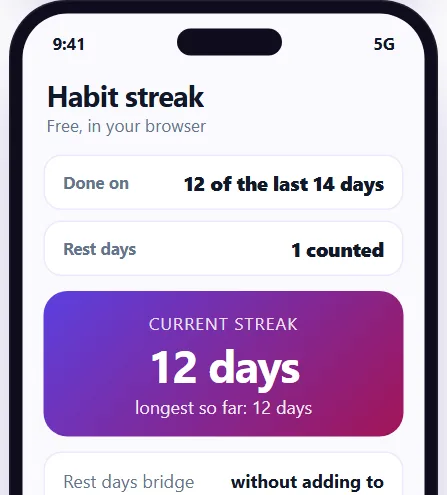 Habit streak calculator
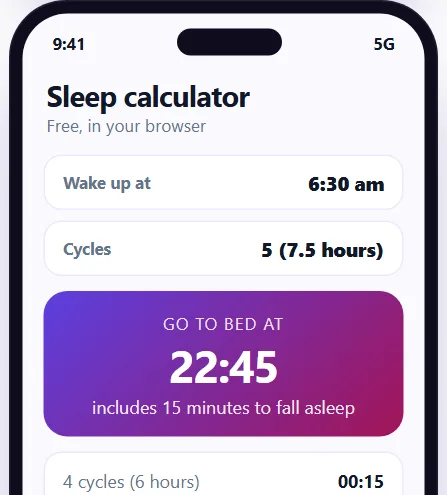 Sleep calculator
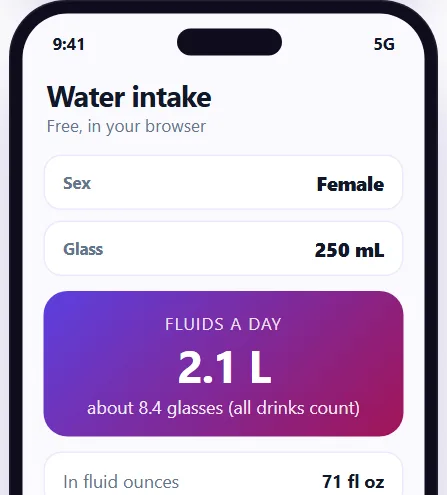 Water intake calculator
 How to start a habit tracker
 Habit stacking explained
 How long to build a habit
 How many sleep cycles
 How much water to drink
 Habit tracker printable
 Pomodoro timer
Keep your results in the Daily Journal
Habits, food, mood and sleep in one private place, with progress charts and a daily research card. Free to start.
- Every claim names its study
- Alone, as a couple or with a group
- Private by default
What this hub is for
This hub is for anyone trying to make a small change stick: drink more water, walk after lunch, write one line a day, get to bed earlier. It brings together the calculators, guides, printables and app pages that deal with routine, and it keeps the claims modest. The research here is about ordinary habits in ordinary people, not about willpower.
You do not need an account for any of it. The streak calculator, the sleep and water calculators and the printables run or download without signing in, and nothing you type into a calculator is saved or sent.
What the research says, and what it does not
The best known number is 66 days. In a study of 96 volunteers (Lally and others, 2010), a new habit took a median of 66 days to feel automatic, but the range ran from 18 to 254 days. So there is no magic number, and the honest answer to how long it takes is that it depends on the habit and the person.
The second finding is the one that matters most when you slip: missing a single day did not undo progress. That is why the streak calculator on this hub lets you mark rest days, so a planned break bridges a gap without adding to the count and without resetting it.
What the research does not say is that tracking makes you virtuous. A tracker only makes the pattern visible. It helps when the habit is small, tied to something you already do, and checked once a week so you can adjust.
How to choose where to start
Pick the page that matches your problem rather than reading everything:
- You do not know where to begin: read how to start a habit tracker. It says pick one small habit, attach it to a cue, mark each day and review once a week, and that one to three habits is plenty.
- You forget to do it: read habit stacking. It attaches the new habit to one you already do with the sentence, after I do the current habit, I will do the new habit.
- You want to know how long it will take: read how long it takes to build a habit, then use the streak calculator to count your own run.
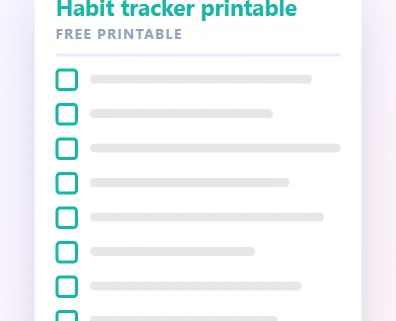
- You want paper: the habit tracker printable has eight habit rows and a box for every day of the month.
- Your routine depends on sleep or water: use the sleep calculator to fit bedtimes to whole 90 minute cycles, and the water intake calculator for the national adequate intake of fluids.
How sleep, water and habits connect
Sleep and water are the two habits most people already have a feeling about. Most adults need 7 to 9 hours of sleep, which is 5 or 6 cycles of about 90 minutes, plus about 15 minutes to fall asleep. To wake at 7:00 am that means bed at 11:15 pm or 9:45 pm. The adequate intake of fluids is 2.6 litres a day for men and 2.1 litres for women, counting every drink.
These are numbers to aim near, not targets to chase. A good first habit is often the cue before them: a glass of water on waking, or a phone put down at the same time each night.
Where the Daily Journal fits, and what it does not do yet
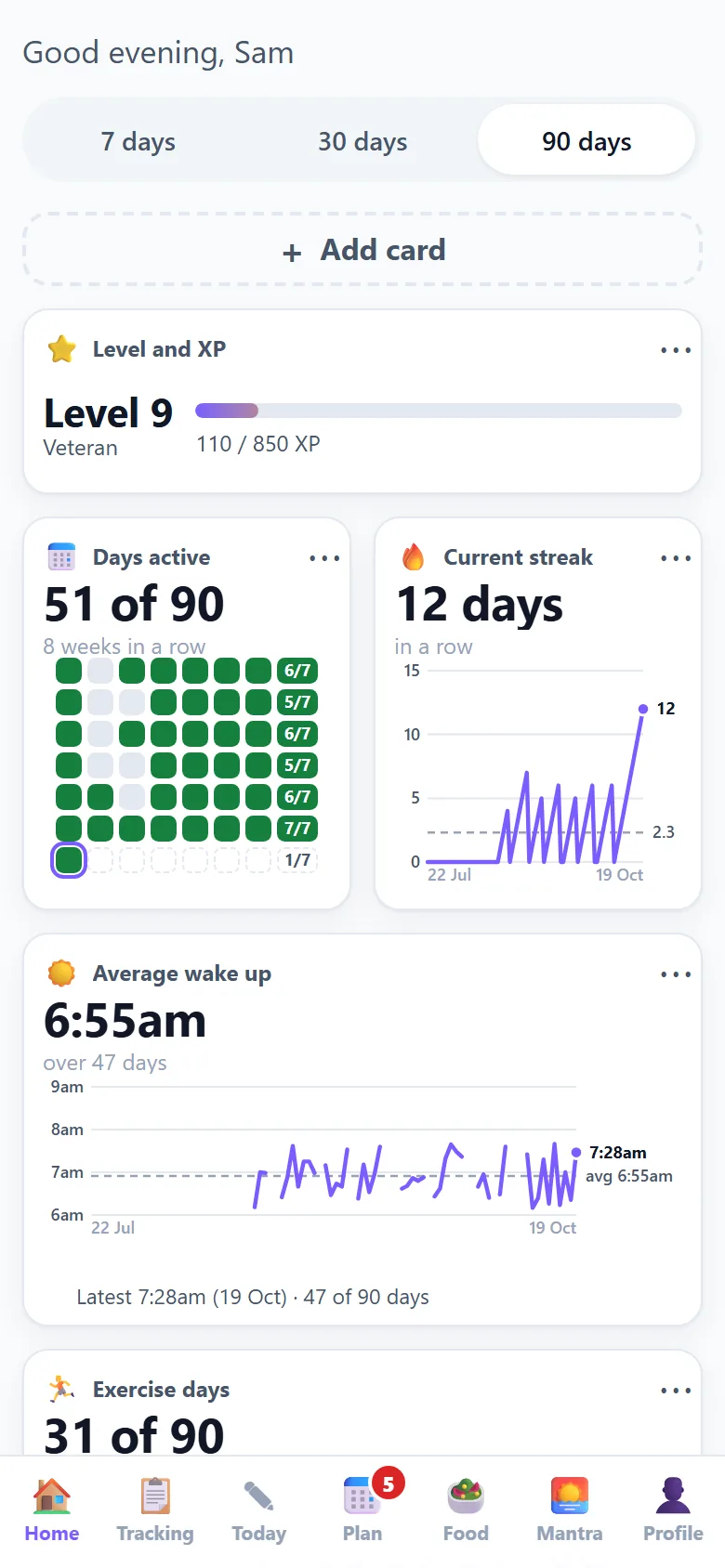
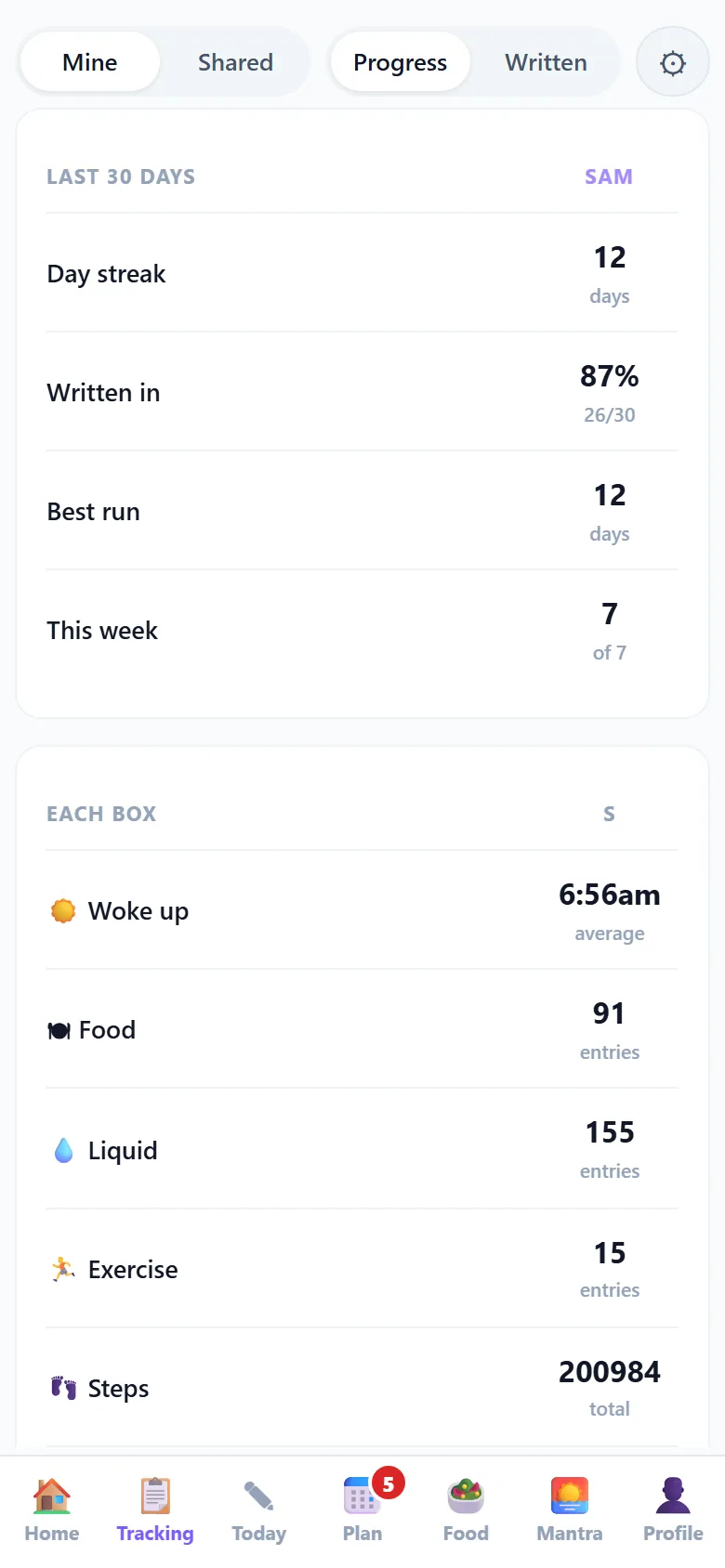
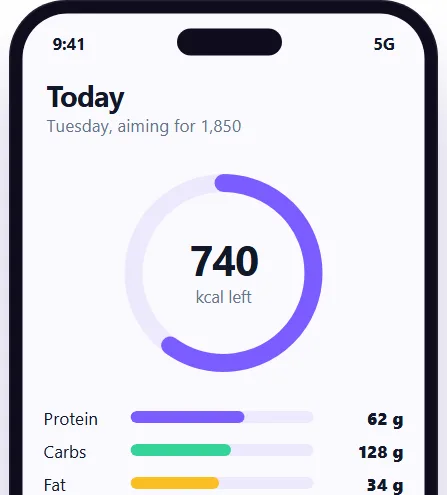
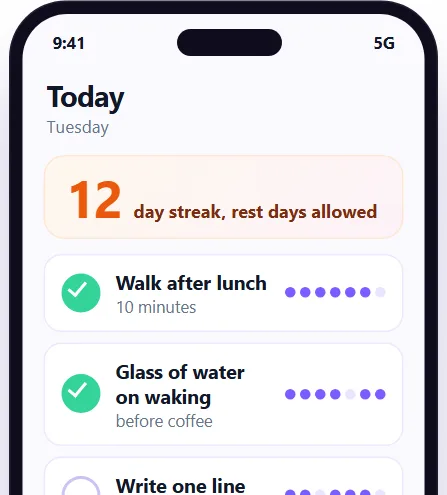
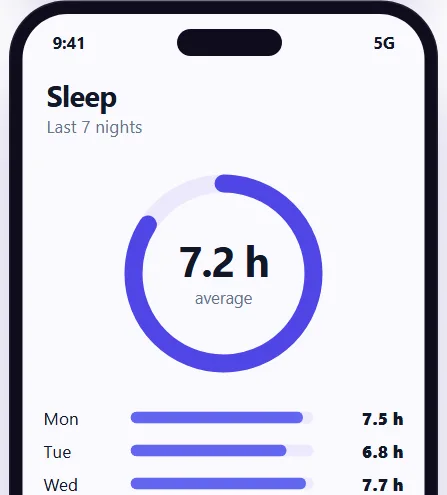
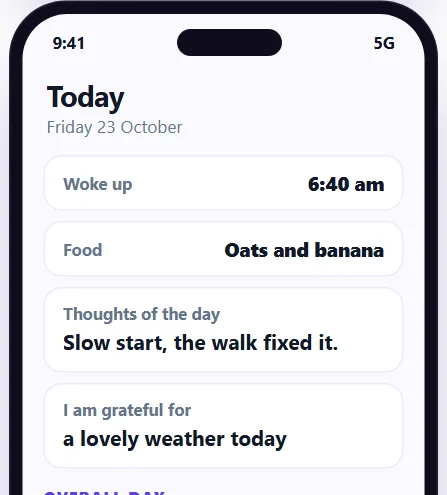
The Daily Journal keeps the habit rhythm in one private place. Today has a box for each daily thing, Home shows your current streak and days active, and Tracking puts your days side by side so a gap shows straight away. You can share with one person at a time and stop whenever you like.
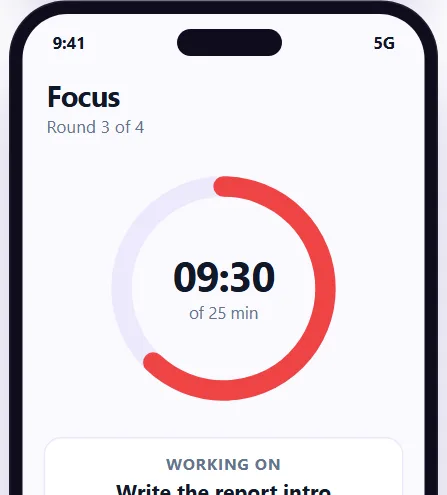
What it does not do yet: a separate list of habits each with its own streak is only partly built, rest days that bridge a streak are in the calculator but not yet in the app, and there are no widgets or a watch app. The habit tracker page sets this out in a table, and the Pomodoro and sleep tracker pages do the same for focus and sleep.
Go deeper
Start with the three tools: the habit streak calculator, the sleep calculator and the water intake calculator. Then read the five guides in order of your problem. The habit tracker printable gives you the paper version, and the three app pages show what a habit tracker, a focus timer and a sleep tracker could look like in the app.
Questions
How long does it take to build a habit?
In one study of 96 volunteers a new habit took a median of 66 days to feel automatic, with a range from 18 to 254 days. There is no fixed number, and it varies by habit and person.
What happens if I miss a day?
In the same study, missing one day did not undo progress. Pick the habit up the next day. A rest day option in a streak counter lets a planned break bridge a gap without resetting your run.
How many habits should I track at once?
One to three is plenty. A habit tracker works best with one small habit tied to a cue, marked each day and reviewed once a week, and you can add more once the first feels automatic.
What is habit stacking?
Habit stacking attaches a new habit to one you already do, using the sentence, after I do the current habit, I will do the new habit. The old habit is the cue, so you do not have to remember.
Is a paper habit tracker as good as an app?
Paper works if you will actually use it. A printable tracker has a box for each day and nothing to charge or update. An app adds reminders, streak counting and charts, and you can use both.
How much sleep do I need?
Most adults need 7 to 9 hours of sleep a night and older adults often 7 to 8, according to the Sleep Health Foundation in Australia and the National Sleep Foundation in the US.
How much water should I drink?
The national adequate intake of fluids for adults is 2.6 litres a day for men and 2.1 litres for women, including water, milk and other drinks. Eight glasses is a rule of thumb, not a requirement.
Does the Daily Journal count my streak?
Yes, Home shows your current streak, days active and weeks in a row. Rest days that bridge a gap are in the streak calculator but are not in the app yet.
Is the habit calculator free?
Yes. The habit streak calculator is free, runs in your browser and saves nothing you type. List the days you did your habit and it gives your current streak and your longest streak.
Can I share my habits with someone?
Yes. In the Daily Journal you can share with one person at a time, or a group, and stop whenever you like. Your journal is private by default and nobody sees it unless you choose.
Keep going
Tools that go with this page
Each one shows an example screen, what the paid apps charge and what the Daily Journal does today.
 Journal app
Keep it all in one private place
Sign up free for the Daily Journal app: habits, food, mood and sleep in one private place. Free to start.