Types of journals
The main types of journals are gratitude, reflective, habit, food, sleep, mood, bullet, dream, travel and prompt journals. Each does one job; pick the one that matches what you want to notice, and start with only one.
Updated 21 October 2026. Sources named on the page.
- Ten types, one line each on what it is for
- A starting point for every type
- How to choose, and why one is enough
- Free printable sheets for most of them
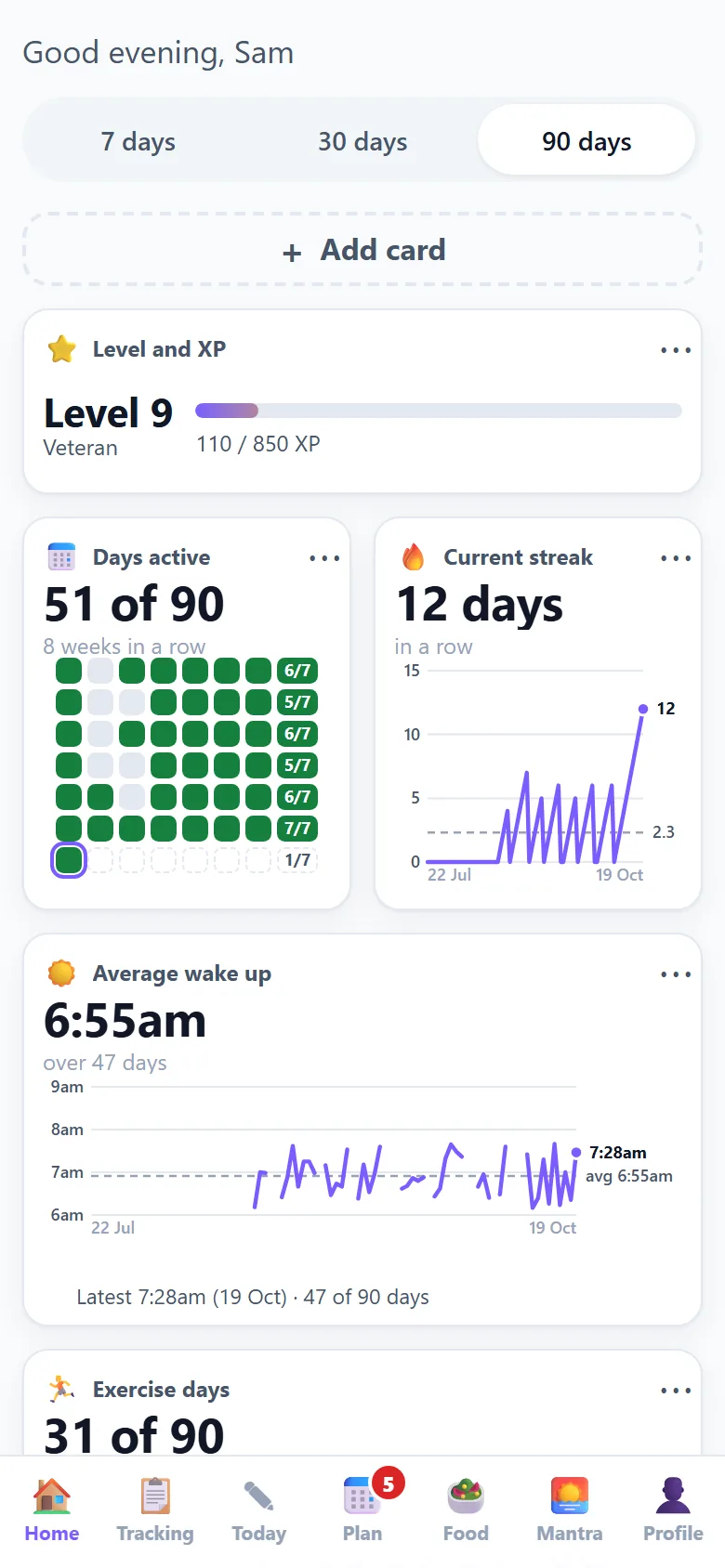
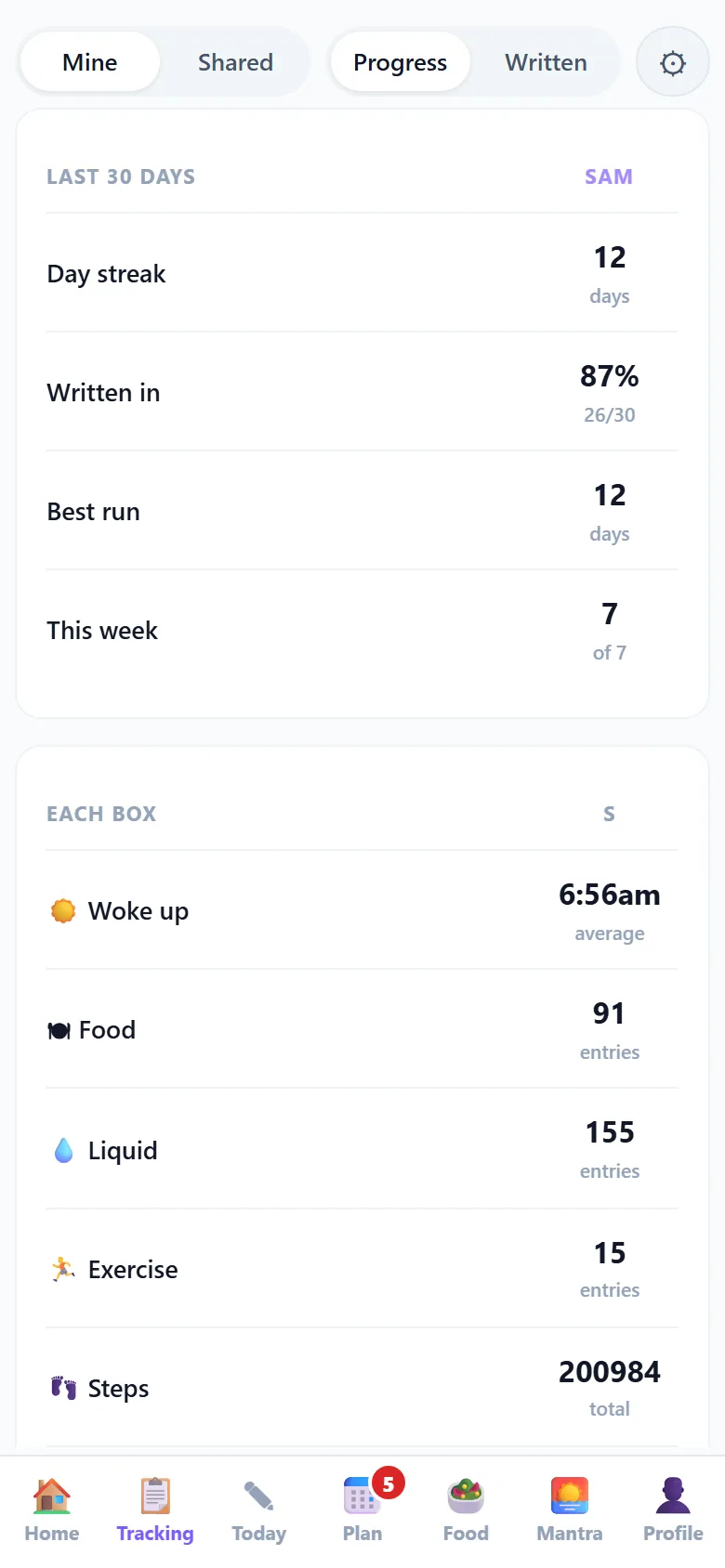
Keep your results in the Daily Journal
Habits, food, mood and sleep in one private place, with progress charts and a daily research card. Free to start.
- Every claim names its study
- Alone, as a couple or with a group
- Private by default
Ten types of journals at a glance
Each type is a way of looking at your days. You can mix them, but one at a time is easier to keep.
Which journal for which job
| Type | What it is for | A first entry |
|---|---|---|
| Gratitude journal | Noticing what is going well | Three small, specific things from today |
| Reflective journal | Making sense of how you feel and why | What happened, how I felt, what I will do next |
| Habit journal | Seeing whether a habit is sticking | A tick for each day you did it |
| Food journal | Seeing what and when you eat | The meal, the time, the serve |
| Sleep journal | Spotting what helps or hurts your sleep | Bedtime, wake time, how rested I felt |
| Mood journal | Noticing patterns in how you feel | A one to five rating and one word |
| Bullet journal | Planning and notes in one place | Today's three tasks and one note |
| Dream journal | Recording dreams before they fade | Two lines written as soon as you wake |
| Travel journal | Keeping a trip as it happens | Where I was, one thing I saw, one thing I ate |
| Prompt journal | Starting when you have nothing to say | One question from a list, answered in a few lines |
Sources: General descriptions written for this page; no health claims are made
General information, not medical advice.
How to choose a type
Ask what you want to notice. If you want to feel more positive, a gratitude journal. If you want to understand a bad week, a reflective or mood journal. If you want a habit to stick, a habit journal with a tick a day. Start with one.
Why one is enough at first
Four journals means four things to forget. Choose the one with the smallest daily step, such as three lines or a single tick, and add a second only when the first is easy.
Free sheets for most types
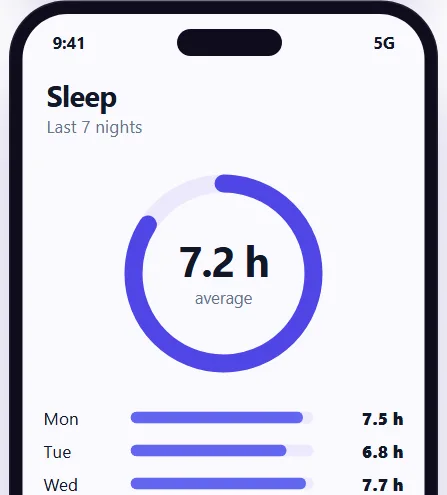
This site has printable sheets for gratitude, food, sleep, mood and habit journals, a page of thirty journal prompts and a calorie tracker. Print one, use it for a month, and see whether it earns its place on the fridge.
Paper or one app
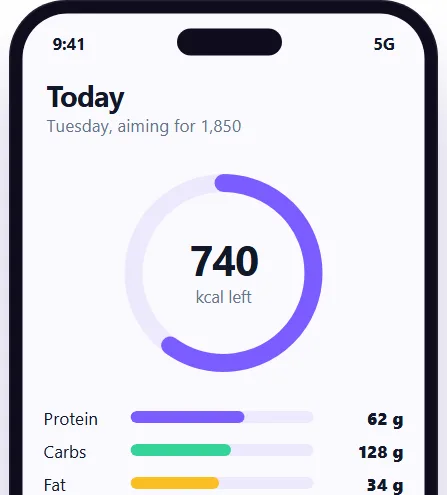
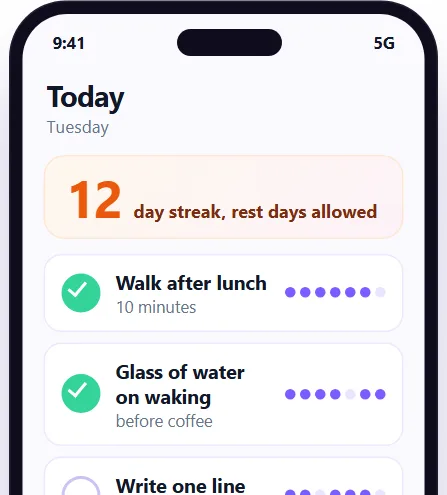
Paper is private and simple. If you would rather keep food, sleep, mood and habits in one place with reminders and charts, the Daily Journal does that, and the first three habits are free.
Questions
What type of journal is best for beginners?
A gratitude or prompt journal, because each entry is one to three lines and there is nothing to decide. Start there.
Can I keep more than one type?
Yes, but one at a time is easier. Add a second after a month, once the first feels automatic.
How is a diary different from a journal?
In everyday use they overlap. A diary tends to record what happened; a journal tends to look at what it meant. You can do both in one page.
Do I need to write every day?
No. Most days is a good aim, and a missed day is simply a blank box.
Keep going
Tools that go with this page
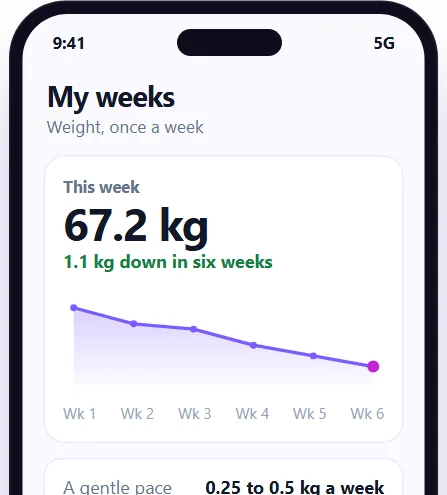
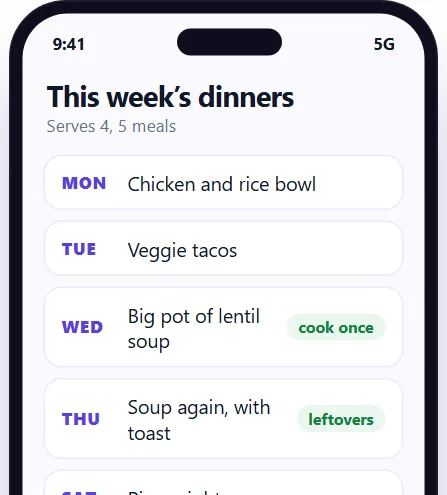
Each one shows an example screen, what the paid apps charge and what the Daily Journal does today.
 Weight loss journal
 Meal planner
Try more than one type in one private place
Sign up free for the Daily Journal: habits, food, mood and sleep in one private journal, with reminders and charts.