Food
Work out what to eat, in kcal and kilojoules, then learn how the numbers are made. Calculators, guides and a printable food diary are free.
Updated 21 October 2026. Sources named on the page.
- Calculators for calories, deficits, protein and macros
- Plain guides, each with its formula and sources
- Kilojoules and calories side by side
- For healthy adults aged 19 and over; not medical advice
Food calculators
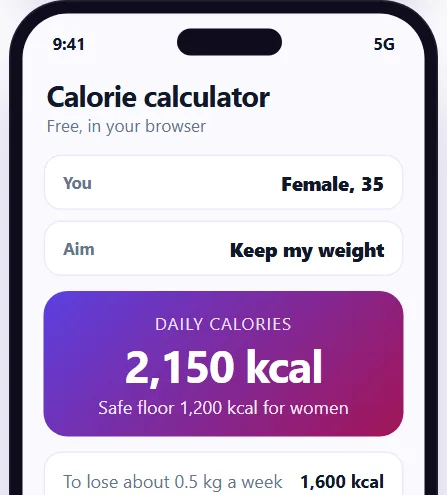 Calorie calculator
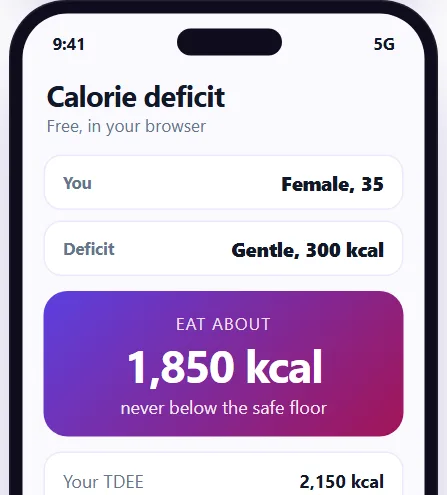 Calorie deficit calculator
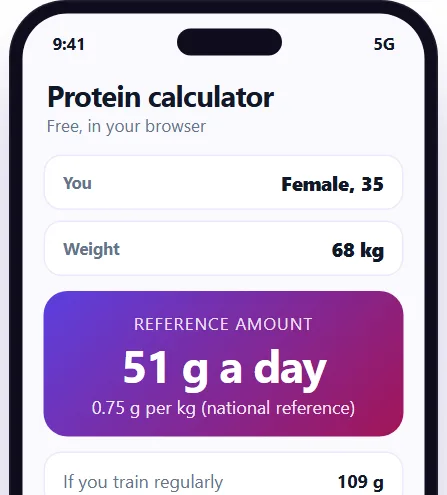 Protein calculator
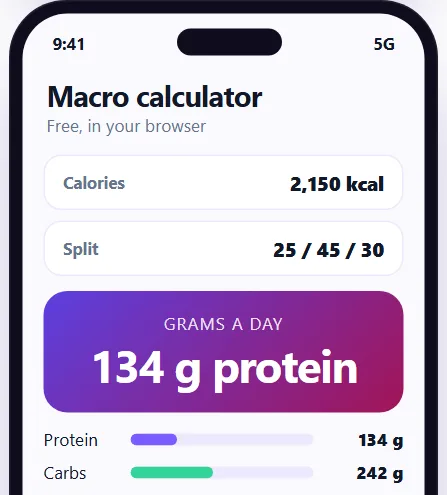 Macro calculator
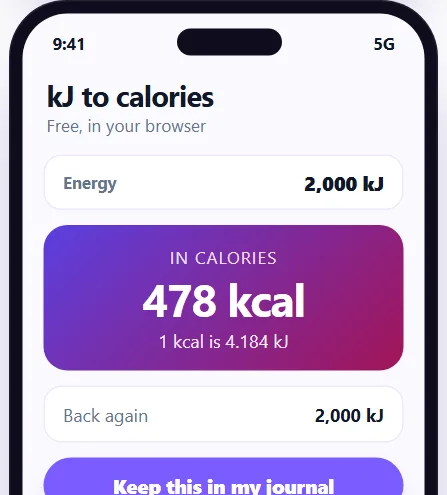 kJ to calories
Food guides
 How many calories to eatWorked examples for a woman and a man.
 What is a calorie deficitSize, floor and example.
 How much protein you needReference amounts and training.
 How to calculate macrosPercentages to grams.
 Macro split examplesThree splits in grams.
 Reading Australian labelsPer serve, per 100 g and stars.
 kJ vs caloriesThe difference and the conversion.
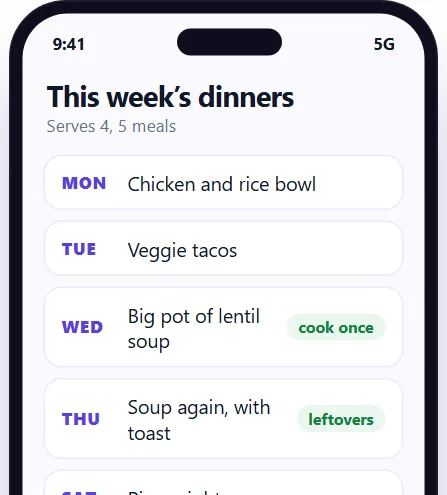 Meal planner
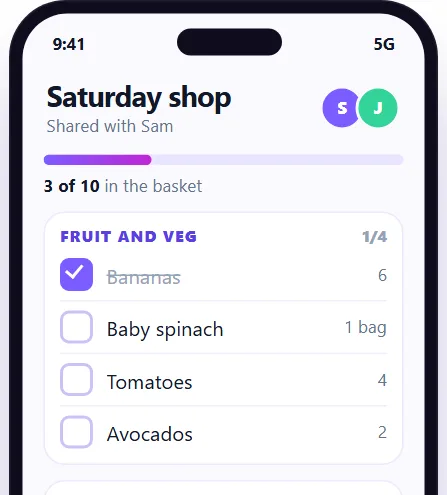 Grocery list app
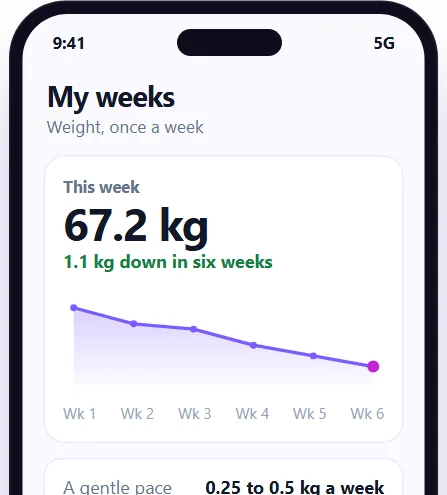 Weight loss journal
Calories in common foods
Per 100 g and per serve, with kJ, from USDA data.
Keep your results in the Daily Journal
Habits, food, mood and sleep in one private place, with progress charts and a daily research card. Free to start.
- Every claim names its study
- Alone, as a couple or with a group
- Private by default
What this hub covers
This hub is for working out what to eat, and for understanding how the numbers are made. It covers daily energy, a calorie target, a gentle calorie deficit, protein, the split of protein, carbohydrate and fat, and the kilojoules on an Australian food label. Everything is estimated for healthy adults aged 19 and over, in kilojoules as well as calories, and every formula is shown with its source.
It does not tell you what you should weigh, and it will not produce a rapid weight loss plan. Calorie results are rounded and never go below 1,200 kcal a day for women or 1,500 kcal for men.
How the numbers connect
Most food questions are one chain. Your resting energy comes from the Mifflin and St Jeor equation. Multiply it by an activity factor from 1.2 for mostly sitting to 1.9 for extremely active, and you have your daily energy use, called TDEE. For a 30 year old woman of 65 kg and 165 cm who is moderately active that is about 2,100 kcal to keep her weight and about 1,550 kcal to lose slowly.
From that daily energy you can set a calorie target, then split it into protein, carbohydrate and fat. Protein and carbohydrate have 4 kcal per gram and fat has 9, so a 2,000 kcal day at 20, 50 and 30 percent is 100 g of protein, 250 g of carbohydrate and 67 g of fat. Protein has its own reference amount: 0.84 g per kg for men and 0.75 g per kg for women aged 19 to 70, which is about 67 g a day for an 80 kg man.
How to choose the right page
Start from the question you actually have:
- How many calories should I eat: use the calorie calculator, then read how many calories you should eat for a worked example.
- I want to lose weight slowly: use the calorie deficit calculator. A common rule of thumb is that eating 550 kcal a day below your daily energy loses about 0.5 kg a week, from roughly 7,700 kcal per kg, and real results vary between people.
- How much protein is enough: use the protein calculator, and read how much protein you need for the reference amounts by age.
- What should my macros be: use the macro calculator, and read the macro split examples for a balanced, a higher protein and a lower carb day.
- What does this label mean: read how to read nutrition labels in Australia. Compare foods with the per 100 g column and judge a portion with the per serve column.
- Is it kJ or calories: use the converter. One calorie is 4.184 kilojoules, so 2,000 kcal is 8,368 kJ, and Australian labels use an average adult daily intake of 8,700 kJ.
The most common mistakes
The first is choosing too high an activity level. Most people overestimate how active they are, so if you are unsure, choose the lower factor. The second is treating a calculator result as a target to hit exactly. Every figure here is an estimate with a margin, and your own results over a few weeks matter more than the formula.
The third is cutting too hard. A gentle deficit is easier to keep than a harsh one, and the safe floors exist for a reason. If you have a medical condition, are pregnant or breastfeeding, or have had an eating disorder, talk to a doctor or an accredited practising dietitian instead of using these pages.
Where the Daily Journal fits, and what it does not do yet
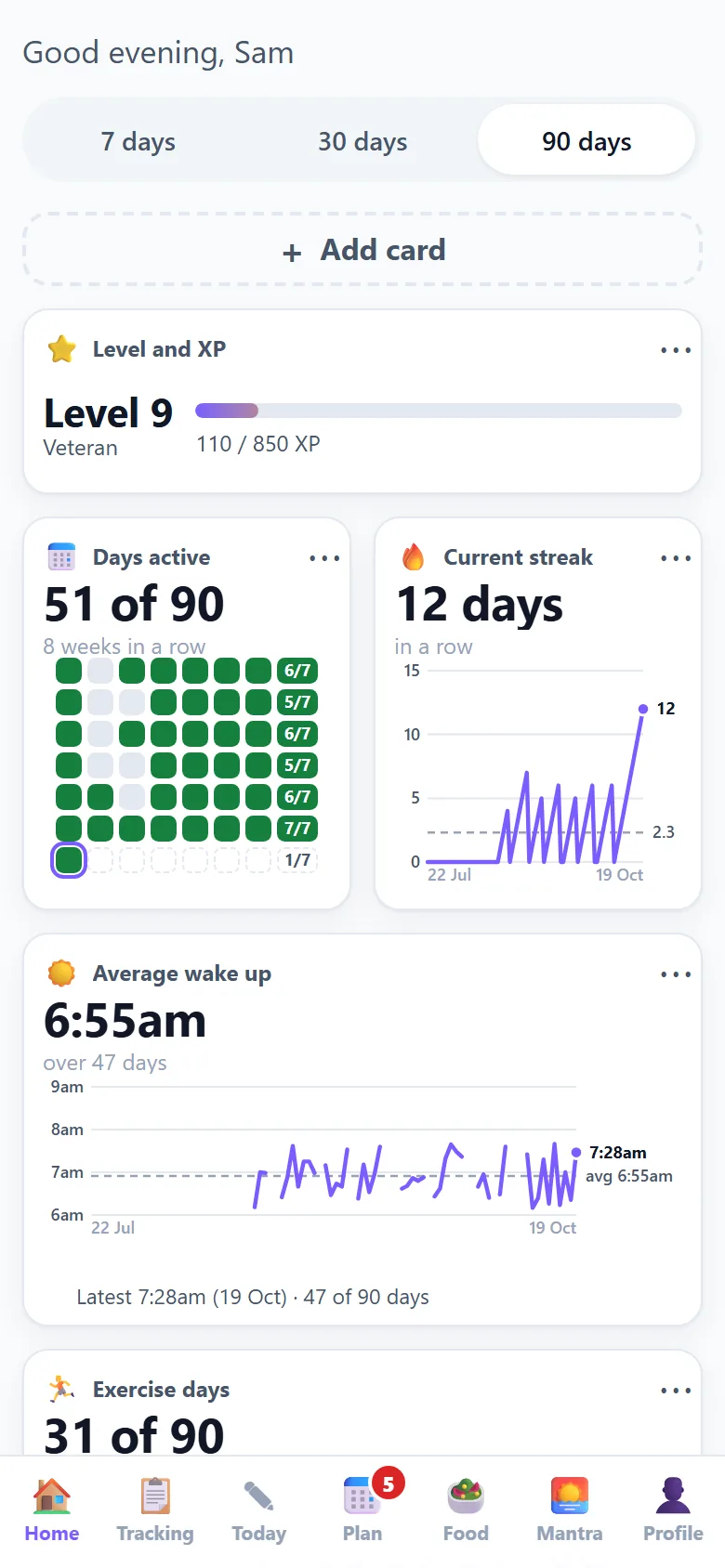
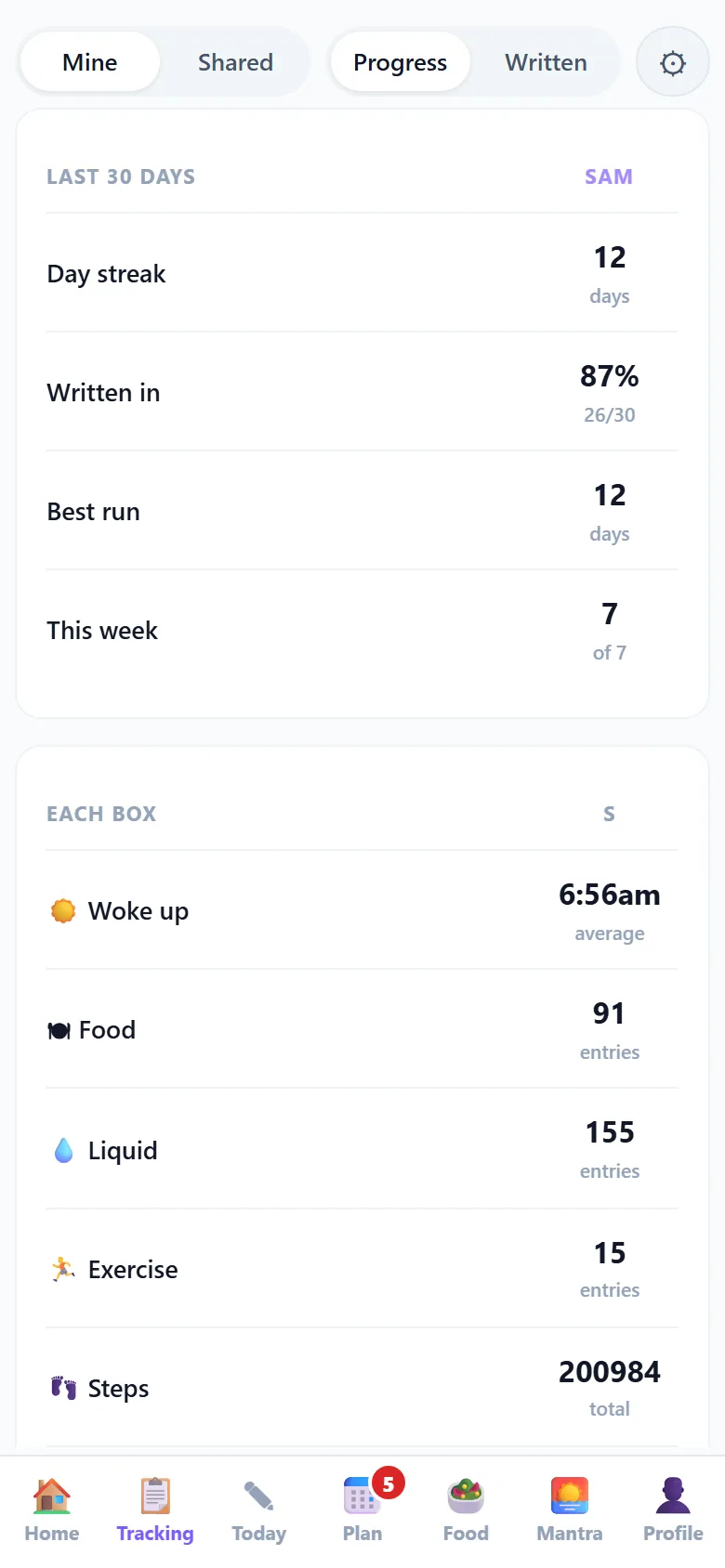
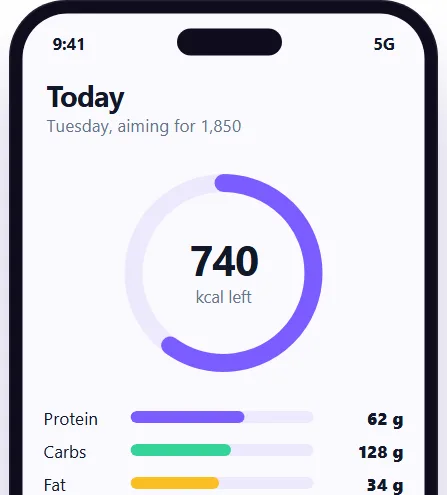
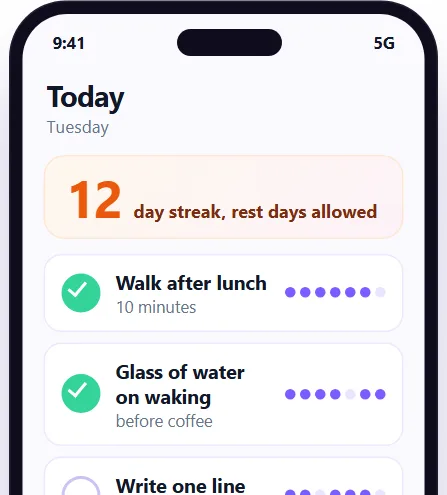
The Daily Journal has a Food page that logs what you eat with calories and the main nutrients, a quick add for common foods, and food boxes on Today that show beside your sleep, exercise and mood. A daily calorie target is partly there.
It does not yet have a barcode scanner, branded and restaurant foods, recipes, a meal planner or a grocery list. The calorie counter, meal planner, grocery list and weight loss journal pages each show what those could look like and what paid apps charge, and your sign up tells us which to build first.
Go deeper
The five calculators are the quickest way to a number. The seven guides explain where each number comes from, with worked examples you can check. The food diary and meal planner printables give you a paper version, and the four food tool pages show what an app version could do.
Questions
How many calories should I eat a day?
It depends on you. Estimate your daily energy, then adjust for your aim. For a 30 year old woman of 65 kg and 165 cm, moderately active, that is about 2,100 kcal to keep her weight.
What is a calorie deficit?
A calorie deficit means eating fewer calories than your body uses in a day. A common rule of thumb is that 550 kcal a day below your daily energy is about 0.5 kg a week.
How much protein do I need?
The national reference amount for healthy adults is 0.84 g of protein per kg of body weight for men and 0.75 g per kg for women, rising after age 70. For an 80 kg man that is about 67 g a day.
How do I calculate my macros?
Multiply your daily calories by each percentage, then divide by the calories in a gram: 4 for protein, 4 for carbohydrate and 9 for fat. A 2,000 kcal day at 20, 50 and 30 percent is 100 g, 250 g and 67 g.
What is the difference between kJ and calories?
Kilojoules and calories measure the same thing in different units. One calorie is 4.184 kJ, so 2,000 kcal is 8,368 kJ. Australian labels show kJ, and many other countries show calories.
How do I read a nutrition label in Australia?
Use the per 100 g column to compare foods and the per serve column to see what you will eat. Energy is in kilojoules, and ingredients are listed from most to least by weight.
Which activity level should I choose?
If you are unsure, choose the lower one. Calorie calculators multiply resting energy by a factor from 1.2 to 1.9, and most people overestimate how active they are.
What is the lowest number of calories these tools will give?
Results never go below 1,200 kcal a day for women or 1,500 kcal a day for men, and deficits are limited to 300 or 550 kcal a day. We do not offer rapid weight loss plans.
Can the Daily Journal count my calories?
Partly. The Food page logs what you eat with calories and the main nutrients and has quick add for common foods. Barcode scanning, branded foods and recipes are not built yet.
Is any of this medical or dietary advice?
No. These are general estimates for healthy adults aged 19 and over. They do not replace a doctor or an accredited practising dietitian, and the health disclaimer explains who should not use them.
Keep going
Tools that go with this page
Each one shows an example screen, what the paid apps charge and what the Daily Journal does today.
Keep it all in one private place
Sign up free for the Daily Journal app: habits, food, mood and sleep in one private place. Free to start.