SMART goals explained
SMART stands for specific, measurable, achievable, relevant and time-bound. A SMART goal is written so you can tell exactly when you have reached it. Example: walk for twenty minutes on five days a week for the next six weeks.
Updated 21 October 2026. Sources named on the page.
- What each letter means
- Three worked examples
- A one line template
- Where the idea comes from
Keep your results in the Daily Journal
Habits, food, mood and sleep in one private place, with progress charts and a daily research card. Free to start.
- Every claim names its study
- Alone, as a couple or with a group
- Private by default


What each letter means
Specific: say exactly what you will do. Measurable: say how you will count it. Achievable: pick something you can do with your current time and energy. Relevant: make sure it matters to you. Time-bound: give it a start and an end.
Example one: walking
Not "get fitter", but "walk for twenty minutes on five days a week for the next six weeks". It is specific, easy to count, realistic for most people, linked to fitness and has an end date.

Example two: sleep
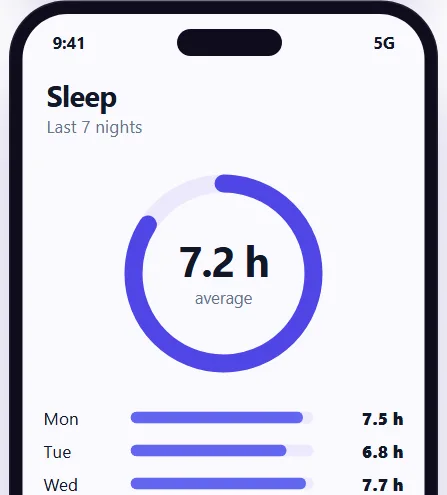
Not "sleep better", but "be in bed with the lights out by 10:30 pm on weekdays for the next four weeks". The target and the time frame are clear and you can tick it off.
Example three: journaling
Not "write more", but "write three lines in my journal on at least five evenings a week until the end of the month". Small enough to do and clear enough to check.
A one line template
I will [do what] [how often or how much] by [date], so that [why it matters]. Write it on a goal setting worksheet or at the top of a journal page and check in once a week.
Where it comes from
The SMART idea is usually credited to George T. Doran, in a 1981 article in Management Review. It began as a way to write business objectives and is now used for personal goals too. Different sources give slightly different words for the letters.


When SMART is too tight
A goal this precise can feel rigid. If it makes you anxious, loosen the numbers, or pair it with a habit you can do on most days. The point is clarity, not pressure.
Questions
What does SMART stand for?
Specific, measurable, achievable, relevant and time-bound. Some lists use slightly different words for A and R.
Can you give an example of a SMART goal?
Walk for twenty minutes on five days a week for the next six weeks.
Who invented SMART goals?
It is usually credited to George T. Doran, in a 1981 Management Review article.
How do I track a SMART goal?
Write it down, tick off each day on a tracker, and review it once a week. A goal setting worksheet and a habit tracker printable are both free here.
Keep going
Tools that go with this page
Each one shows an example screen, what the paid apps charge and what the Daily Journal does today.
 Journal app
Start a private journal: smart goals explained
Sign up free for the Daily Journal: a short entry a day, reminders, and habits, food, mood and sleep in one private place.