kJ vs calories
Kilojoules (kJ) and calories (kcal) measure the same thing in different units. One calorie is 4.184 kJ, so 2,000 kcal is 8,368 kJ. Australian food labels show kJ, and many other countries show calories.
Updated 21 October 2026. Sources named on the page.
Key factOne calorie (kcal) is exactly 4.184 kilojoules, so 2,000 kcal equals 8,368 kJ; Australian food labels show kJ and use 8,700 kJ as the average adult daily intake.
- What each unit is
- The exact factor and a quick mental rule
- A table of common amounts
- Why Australia uses kilojoules
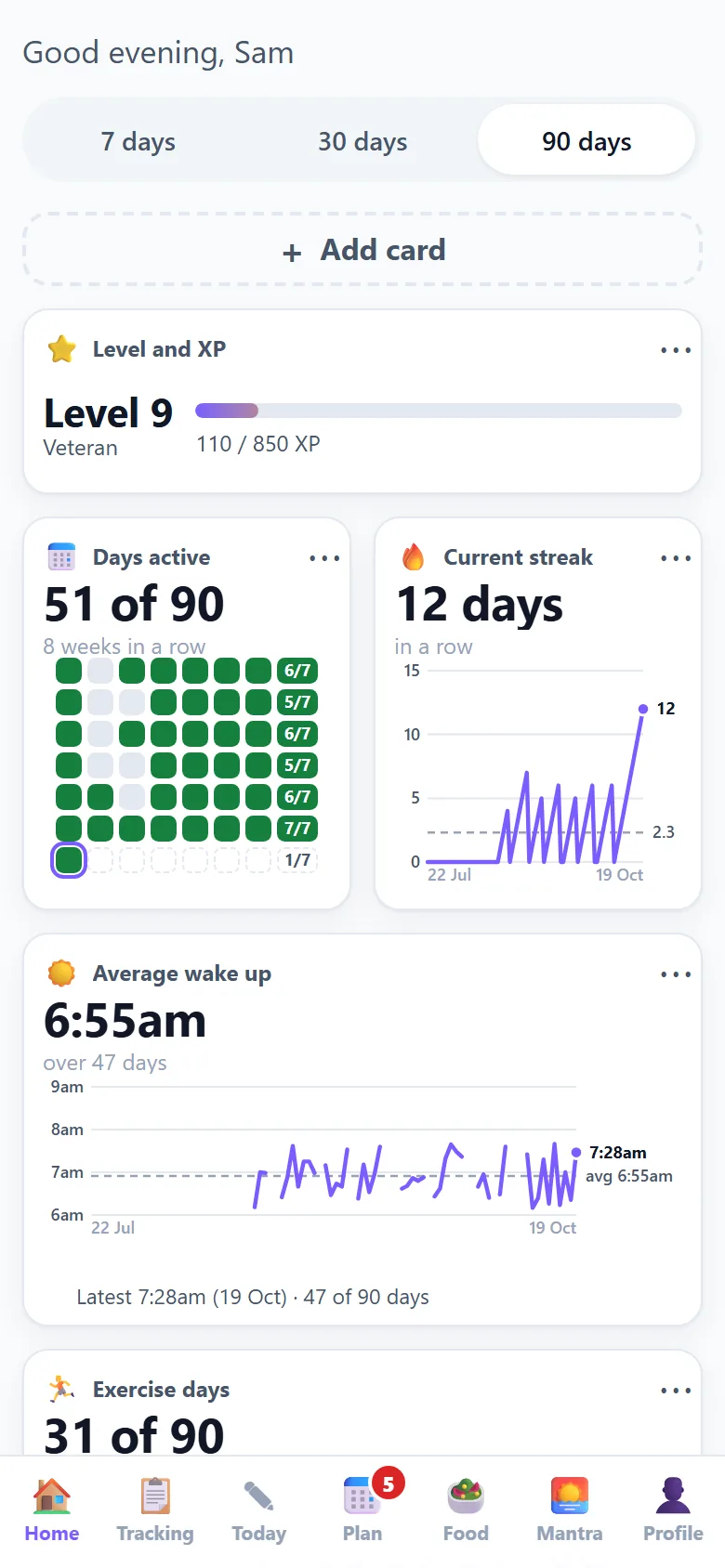
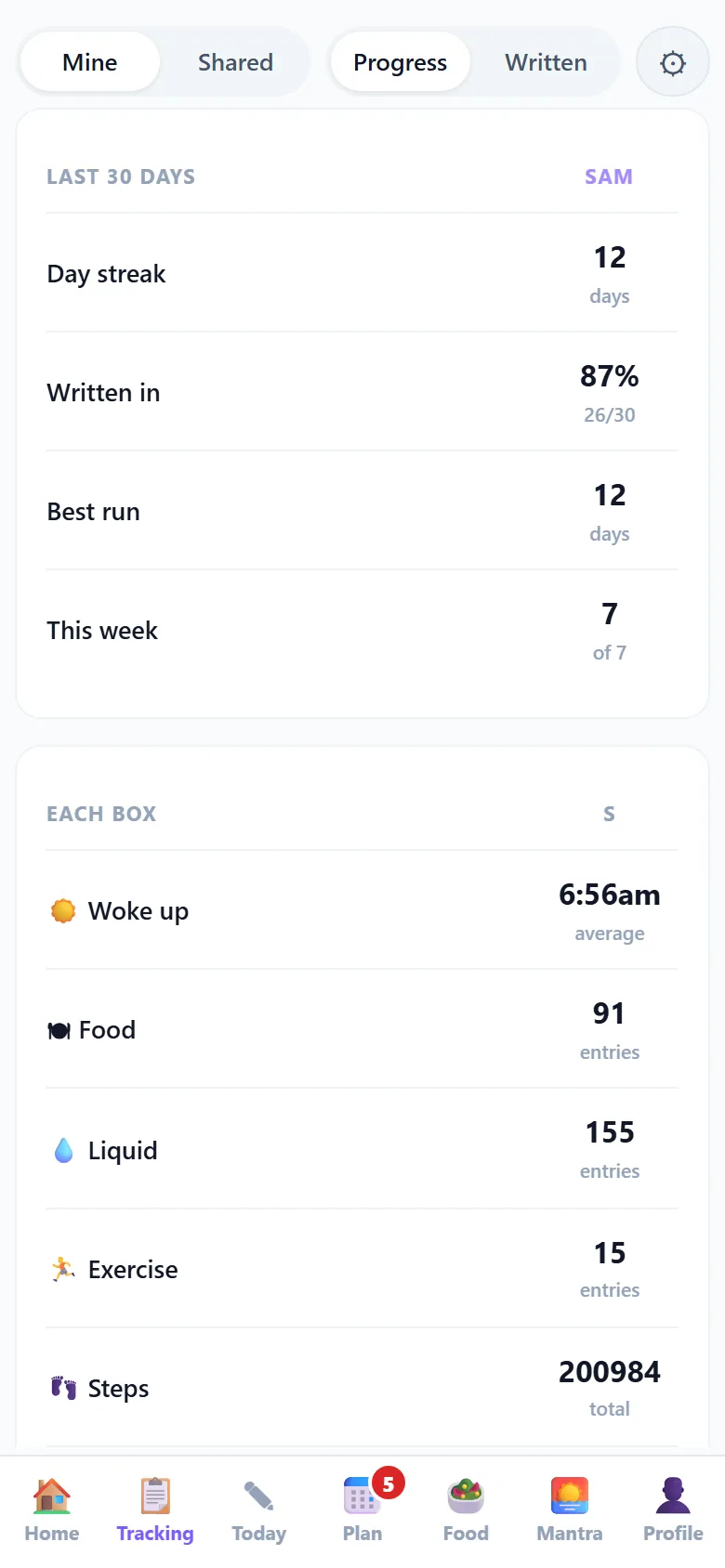
Keep your results in the Daily Journal
Habits, food, mood and sleep in one private place, with progress charts and a daily research card. Free to start.
- Every claim names its study
- Alone, as a couple or with a group
- Private by default
Convert any amount
Type an amount and choose a direction to convert instantly.
Common amounts
Kilojoules = kilocalories x 4.184. Kilocalories = kilojoules / 4.184.
Everyday amounts
| Item | kJ | kcal |
|---|---|---|
| A small snack | 600 kJ | 143 kcal |
| A light meal | 1,500 kJ | 359 kcal |
| The Australian label average day | 8,700 kJ | 2,079 kcal |
| A 2,000 kcal day | 8,368 kJ | 2,000 kcal |
Sources: The thermochemical calorie is defined as 4.184 joules, so 1 kcal = 4.184 kJ; Australian food labels use an average adult daily intake of 8,700 kJ as a reference
General information, not medical advice.
Are calories and Calories the same?
On food labels, the calorie people mean is a kilocalorie (kcal), sometimes written Calorie with a capital C. They are the same thing.
A quick mental rule
Divide kilojoules by 4 for a rough number of calories. 1,000 kJ is about 250 calories by this rule, and 239 by the exact one. For a label you are reading in a shop, the rule is close enough.
Why Australia uses kilojoules
Australia and New Zealand label food in kilojoules, the metric unit of energy. Many other countries use kilocalories, which is why recipes and apps from overseas can look different.
Which should I use?
Use the one on the label in front of you, and convert when you compare. The calculators on this site show both.
Worked examples
A snack bar with 1,500 kJ per serve is 1,500 divided by 4.184, which is about 359 kcal. A 250 kcal biscuit is 250 times 4.184, which is about 1,046 kJ. The Australian label reference of 8,700 kJ is about 2,079 kcal.
Rounding is fine for everyday use. The converter does the sum for any number and rounds sensibly.
Reading an Australian food label
Look first at whether the figure is per serve or per 100 g. A pack can list both, and the per serve figure depends on a serve size the maker chose. To compare two products, compare per 100 g.
If your target is in calories and the label is in kilojoules, convert the label once and write it beside the product in your notes, rather than converting every time you shop.
Common mix ups
Comparing a per serve figure with a per 100 g figure. Mixing kilojoules and kilocalories in one running total. Forgetting that a "Calorie" with a capital C on an American label means the same as a kcal.
Pick one unit for the day and convert everything else into it.
Questions
How many kJ are in a calorie?
One kilocalorie is 4.184 kilojoules.
How many calories are in 1,000 kJ?
About 239 kcal.
Is 8,700 kJ a target?
No. It is the average adult daily intake used on labels so foods can be compared. Your own needs differ.
Why do apps show different numbers?
Some use calories and some use kilojoules, and food databases can differ. Convert with 4.184 to compare.
How many kilojoules are in a calorie?
One kilocalorie (kcal), which most people call a calorie, is 4.184 kilojoules.
Is 8,700 kJ the amount I should eat?
No. It is the average adult reference figure the label uses for percentages. Your own need depends on your age, size and activity, and the calorie and TDEE calculators work it out.
Which unit should I use for tracking?
Whichever your label, app or advice uses. Stay with one, and use the converter when something arrives in the other.
Keep going
Tools that go with this page
Each one shows an example screen, what the paid apps charge and what the Daily Journal does today.
 Weight loss journal
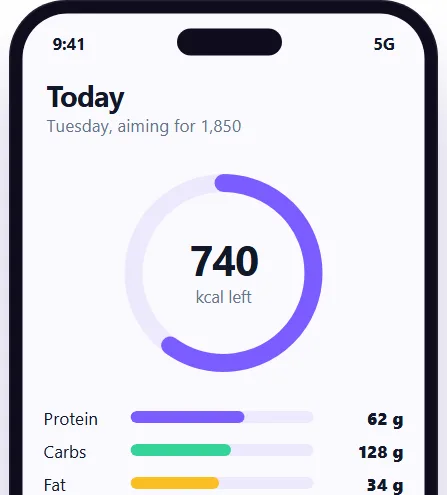
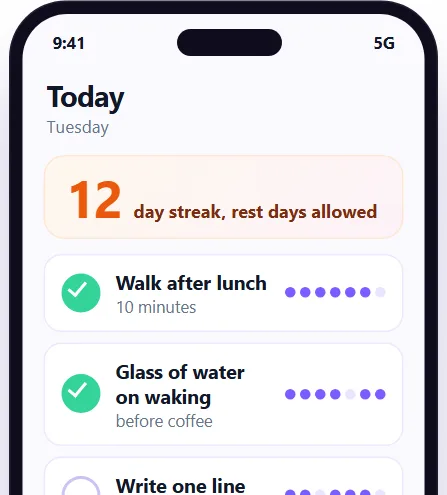
Log food in whichever unit you like
Sign up free for the Daily Journal app: habits, food, mood and sleep in one private place. Free to start.