Habit streak calculator
List the days you did your habit. You get your current streak, your longest streak, and a rest day option so a planned break does not reset the count.
Updated 21 October 2026. Sources named on the page.
Key factIn one study of 96 volunteers, a new habit took a median of 66 days to feel automatic, with a range from 18 to 254 days (Lally and others, European Journal of Social Psychology, 2010).
- Current streak and longest streak from your own dates
- Rest days that do not break the run
- Counts back from today, or from yesterday if today is not done yet
- Runs in your browser: nothing you type is saved or sent
Work out your streak
Free, in your browser. Nothing you type is saved or sent.
Keep your results in the Daily Journal
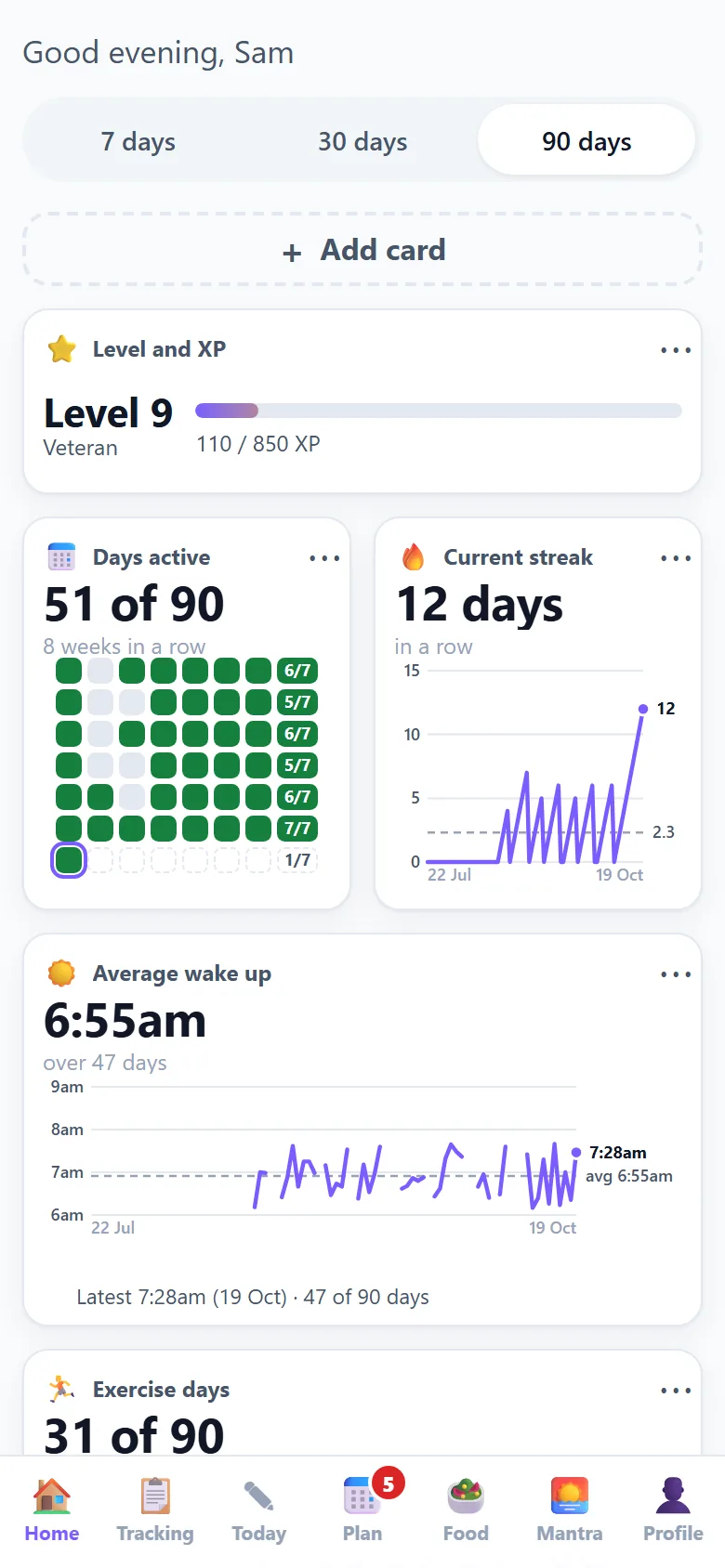
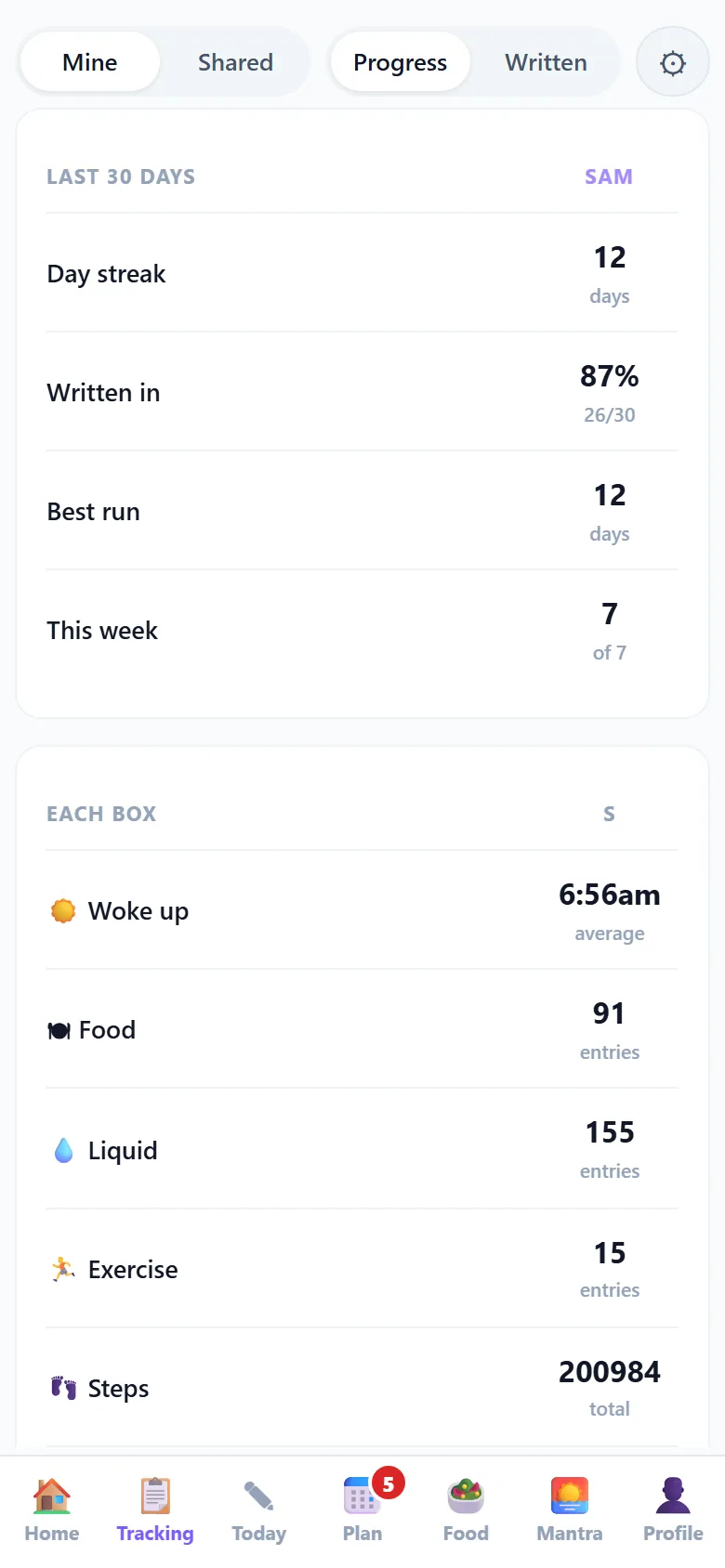
Habits, food, mood and sleep in one private place, with progress charts and a daily research card. Free to start.
- Every claim names its study
- Alone, as a couple or with a group
- Private by default
How a streak is counted
A day counts if you did the habit that day. The current streak counts back from today, or from yesterday if today is not done yet. The longest streak is the longest run of days in a row anywhere in your list. A missed day resets the run unless it is marked a rest day.
Worked examples (today is 21 October 2026)
| Days done | Rest days | Current streak | Longest streak |
|---|---|---|---|
| 17, 18, 19, 20, 21 Oct | none | 5 | 5 |
| 18, 19, 20 Oct (today not done) | none | 3 | 3 |
| 10, 11, 12, 19, 20 Oct | none | 2 | 3 |
| 18, 19, 21 Oct | 20 Oct | 3 | 3 |
| 15, 16, 21 Oct | none | 1 | 2 |
Sources: Streak rules as defined on this site; the same function is tested against these examples; Lally P and others, European Journal of Social Psychology, 2010: habits took a median of 66 days to become automatic, with a wide range
General information, not medical advice.
How to use the calculator
List the days you did the habit and, if you like, the days you took a planned rest. The calculator counts your current streak back from today, or from yesterday if today is not done yet, and shows your longest streak.
Everything stays in the page. Nothing is saved or sent.
Why rest days matter
A streak that breaks the first time you are ill or away is hard to keep. Listing a rest day keeps the streak honest without punishing a sensible break. A missed day that is not a rest day resets the current streak to zero.
For a printed grid, use the habit tracker printable, and for reminders and a month view the Daily Journal habit tracker is free to start.
Questions
How is a habit streak counted?
It is the number of days in a row you did the habit, counting back from today (or from yesterday if today is not done yet).
What is a rest day?
A day you chose not to do the habit on purpose. It is skipped without breaking the streak, but it does not add to it.
How long does it take to build a habit?
One well-known study found a median of 66 days, with a very wide range between people and habits. There is no magic number.
Is my list saved?
No. The calculation runs in your browser and nothing you type is stored or sent anywhere.
What if I miss a day?
Your current streak resets, but your longest streak stays. Missing once matters less than starting again, so pick it back up the next day.
Keep going
Tools that go with this page
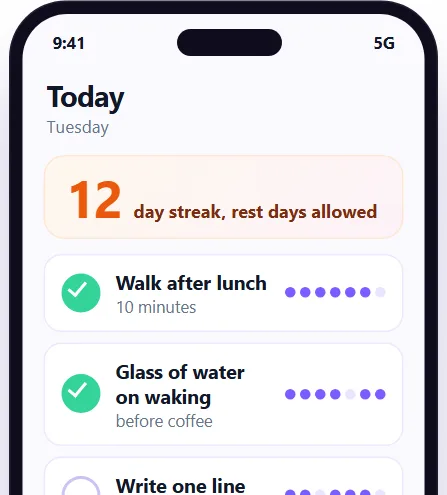
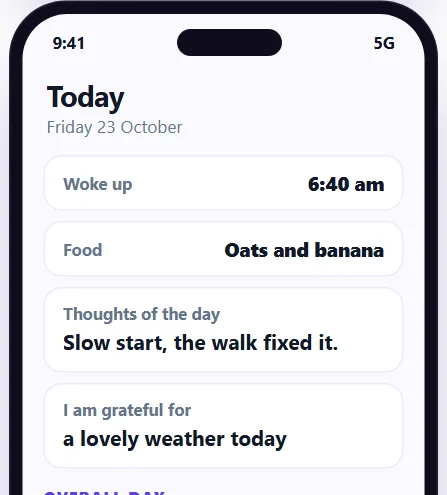
Each one shows an example screen, what the paid apps charge and what the Daily Journal does today.
 Habit tracker app
 Pomodoro timer
 Journal app
Keep your streak without typing dates
Sign up free for the Daily Journal app: habits, food, mood and sleep in one private place. Free to start.